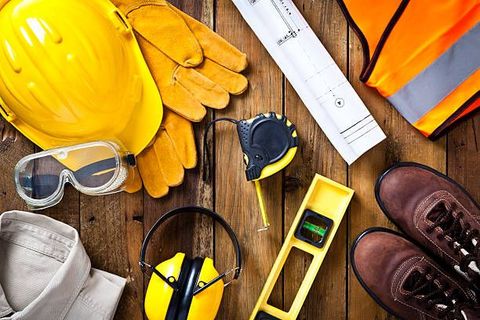
Explore Construction Safety Equipment: A Complete Guide to Types, Uses, and Workplace Protection.
Construction safety equipment includes protective clothing, devices, barriers, warning systems, and monitoring tools used to reduce workplace hazards. These items help protect workers from falling objects, dust, excessive noise, electrical hazards, moving machinery, falls from heights, and other risks commonly found on construction sites.
Construction activities often involve heavy equipment, temporary structures, uneven surfaces, elevated work areas, and changing site conditions. Without appropriate precautions, these hazards can cause serious injuries, occupational illnesses, property damage, and project delays.
Construction safety combines suitable equipment with worker training, hazard identification, safe work procedures, regular inspections, and effective supervision. Personal protective equipment (PPE) is an important part of this approach, but it does not replace measures that eliminate hazards or control them at their source.
Understanding different types of industrial safety products helps workers, supervisors, site managers, and contractors make informed decisions about workplace protection.
Types of Construction Safety Equipment
Construction safety equipment can be grouped according to the hazards it is designed to address. Selecting the correct equipment depends on the task, work environment, exposure level, and applicable safety standards.
Head protection
Safety helmets and hard hats help protect workers from certain impacts, falling objects, and contact hazards. The appropriate helmet depends on the risks present at the site.
Workers should inspect helmets for cracks, damage, deterioration, and other defects. Suspension systems and accessories should be compatible with the helmet, and damaged equipment should be removed from use according to manufacturer guidance.
Eye and face protection
Safety glasses, goggles, and face shields help protect against flying particles, dust, splashes, and sparks.
Examples include:
Safety glasses for general impact hazards.
Sealed goggles for certain dust and splash exposures.
Face shields for additional protection against flying debris or splashes.
Suitable welding helmets and filters for welding operations.
Face shields generally require appropriate primary eye protection when the hazard assessment calls for it.
Hand protection
Safety gloves protect against selected hazards such as abrasion, cuts, punctures, chemicals, and heat. Different materials offer different levels of protection, so gloves must match the specific task.
For example, cut-resistant gloves may be appropriate when handling sharp materials. Chemical-resistant gloves must be selected according to the substance and exposure conditions. Gloves can create additional risks around rotating machinery, so task-specific safety procedures remain important.
Foot protection
Safety footwear can provide protection against impacts, punctures, slipping, and certain environmental hazards. Construction workers may need footwear with protective toe caps, slip-resistant soles, or puncture-resistant components.
The appropriate design depends on the site surface, materials being handled, electrical hazards, and other workplace conditions.
Hearing and respiratory protection
Construction machinery, cutting tools, drilling, and demolition can generate excessive noise and airborne contaminants.
Hearing protection includes earplugs and earmuffs selected for the noise exposure. Respiratory protection may include suitable filtering facepieces, reusable respirators, or specialized equipment depending on the contaminant and exposure level.
Respirators must be selected, maintained, and used according to the hazard assessment and applicable requirements. Dust-generating activities may also require engineering controls, such as local exhaust ventilation or wet cutting methods.
Fall protection equipment
Falls from heights are a major construction hazard. Depending on the work and site conditions, protection may include guardrails, safety nets, properly designed scaffolds, travel-restraint systems, and personal fall-arrest equipment.
A personal fall-arrest system may include a full-body harness, compatible connectors, and a suitable anchorage. Equipment must be inspected and used within its rated limitations. Workers also need training and a practical rescue plan before fall-arrest systems are used.
Why Construction Safety Matters Today
Construction safety protects workers, supports reliable project planning, and helps reduce avoidable incidents. A safe work environment also supports clearer communication and consistent operating procedures.
Who benefits from effective workplace safety?
Construction workers: Better hazard controls can reduce exposure to injuries and occupational illnesses.
Site supervisors: Inspection records help identify unsafe conditions and corrective actions.
Contractors and project managers: Clear procedures improve coordination between teams.
Building owners and the public: Effective site controls can reduce risks associated with falling objects, unauthorized access, and poorly managed work areas.
Construction safety also addresses long-term hazards. Repeated exposure to silica dust, excessive noise, hazardous substances, and physical strain may affect workers even when immediate injuries are not apparent.
A comprehensive safety program therefore combines protective equipment with hazard assessments, appropriate training, equipment maintenance, emergency planning, and worker participation.
Construction Safety Checklist and Site Inspections
A construction safety checklist provides a structured way to review common hazards. It helps supervisors and workers identify problems before work begins and monitor whether corrective actions have been completed.
A checklist should be adapted to the project, work activities, local requirements, and identified hazards. It cannot replace a competent inspection or a detailed risk assessment.
Example construction safety checklist
| Inspection area | What to check |
|---|---|
| Personal protective equipment | Correct equipment, fit, condition, and use |
| Working at heights | Guardrails, scaffold condition, access, and fall protection |
| Electrical safety | Damaged cables, suitable protection, and safe isolation procedures |
| Housekeeping | Clear walkways, controlled debris, and orderly material storage |
| Machinery and tools | Guards, maintenance, inspection records, and safe operation |
| Excavations | Ground stability, access, protective systems, and nearby hazards |
| Fire prevention | Suitable extinguishers, clear exits, and controlled ignition sources |
| Emergency readiness | First-aid arrangements, communication, and evacuation procedures |
A useful construction safety audit checklist should also record the inspection date, location, inspector, findings, risk priority, responsible person, corrective action, and completion status.
Recent Developments and Trends in Construction Safety
Construction safety practices continue to evolve as technology, work methods, and regulatory expectations change.
Digital inspections and reporting
Mobile inspection forms and digital safety records can help teams document hazards, attach photographs, assign corrective actions, and monitor completion. Their effectiveness depends on accurate reporting, consistent follow-up, and proper access to records.
Wearable safety technology
Some workplaces use connected devices to monitor selected conditions, such as worker exposure to heat, proximity to equipment, or entry into restricted areas. These technologies may support hazard awareness, but they do not eliminate the need for supervision, safe procedures, or suitable protective equipment.
Heat-stress prevention
High temperatures are an important concern for outdoor construction workers. Preventive approaches include access to drinking water, suitable rest breaks, shaded recovery areas, gradual acclimatization, and training to recognize heat-related illness.
Dust and noise controls
Construction teams increasingly emphasize controlling hazards at their source through methods such as wet cutting, local exhaust ventilation, equipment maintenance, and noise reduction. Personal protection remains important when other controls do not adequately reduce exposure.
For current developments, safety professionals should consult official regulatory announcements and technical guidance rather than assume that every new device or practice is mandatory or suitable for every site.
Laws and Policies Affecting Construction Safety in India
Construction safety in India is governed by occupational health and safety legislation, applicable rules, technical standards, and state-level enforcement arrangements. Requirements depend on the type of project, the workers involved, and the provisions applicable to the site.
Occupational Safety, Health and Working Conditions Code, 2020
On 21 November 2025, the Government of India announced that the four Labour Codes, including the Occupational Safety, Health and Working Conditions Code, 2020, had come into effect. The codes reorganized several existing labour laws, including the earlier framework for building and construction workers.
The occupational safety code addresses workplace health, safety, and working conditions. Construction stakeholders should consult the current central and state rules, notifications, and implementation guidance to understand their applicable duties.
Other relevant safety requirements
Construction projects may also be subject to applicable building regulations, electrical safety requirements, fire safety provisions, and standards governing particular equipment or work activities.
Important areas of compliance include:
Identifying workplace hazards and implementing appropriate controls.
Maintaining suitable protective equipment.
Providing relevant worker instruction and safety training.
Inspecting equipment, scaffolding, and work areas.
Maintaining required records and reporting incidents where applicable.
Establishing emergency procedures and appropriate first-aid arrangements.
The Directorate General Occupational Safety and Health provides technical information on occupational safety and health in India. Its resources can help readers understand workplace protection and relevant regulatory developments.
Tools and Resources for Construction Safety
Reliable educational resources can help workers, supervisors, and safety professionals develop practical inspection procedures and understand workplace hazards.
Useful websites
Ministry of Labour and Employment: Official labour legislation, notifications, and occupational safety information.
Directorate General Occupational Safety and Health: Technical resources on occupational health, industrial safety, and construction-related hazards.
Delhi Labour Department:State-level information and construction worker safety guidance.
Occupational Safety and Health Administration (OSHA): Educational material on construction PPE, protective equipment, and safety standards.
OSHA Fall Protection: Guidance on fall hazards and protective measures.
OSHA is a United States agency, so its guidance can support general learning but should not be treated as a substitute for Indian legal requirements.
Construction safety audit checklist template
A practical inspection record can include the following fields:
| Field | Information to record |
|---|---|
| Site details | Project name, location, and inspection date |
| Hazard identification | Description of the unsafe condition |
| Risk priority | Low, medium, or high, according to the site's assessment method |
| Corrective action | Steps required to address the hazard |
| Responsible person | Person assigned to follow up |
| Completion status | Open, in progress, or completed |
| Verification | Confirmation that the corrective action is effective |
This template can be adapted for daily inspections, toolbox meetings, periodic safety audits, and project-specific assessments.
Frequently Asked Questions
What is construction safety equipment?
Construction safety equipment includes helmets, safety footwear, gloves, eye protection, respiratory protection, hearing protection, guardrails, and fall-protection systems used to control specific workplace hazards.
Why is a construction safety checklist important?
A construction safety checklist helps identify unsafe conditions, record inspection findings, assign corrective actions, and verify that identified problems have been addressed. It should be tailored to the work and site conditions.
How often should construction safety equipment be inspected?
Inspection frequency depends on the equipment, manufacturer instructions, applicable regulations, and workplace risks. Equipment should be checked before use where required, and damaged or defective items should be removed from use until appropriately addressed.
How can personal protective equipment suppliers be evaluated?
Organizations should assess whether equipment is appropriate for the identified hazards, meets applicable standards, fits the intended users, includes relevant documentation, and comes with clear instructions for inspection, use, and maintenance.
Does wearing PPE eliminate all construction risks?
No. PPE reduces exposure to certain hazards but cannot eliminate every risk. Effective workplace safety also requires hazard elimination, engineering controls, safe work procedures, training, supervision, and emergency planning.
Conclusion
Construction safety equipment is an essential part of workplace protection, but its effectiveness depends on correct selection, proper use, regular inspection, and worker training. A well-designed construction safety checklist and consistent site inspections help teams identify hazards and monitor corrective actions.
Understanding industrial safety products, personal protective equipment, fall protection, and applicable Indian regulations supports informed safety planning. By combining appropriate equipment with effective hazard controls and a strong safety culture, construction teams can work toward safer sites and better protection for everyone involved.

Related Post...

Learn AI-Powered Data Labeling Tools: A Guide to Features, Applications, and Useful Information
Updated: October 19, 2026
Read More
Next-Generation Firewalls Explained: An Informative Guide to Enterprise Network Security.
Updated: October 19, 2026
Read More
Understanding Solar Energy Devices: A Guide to Key Details, Technology, and Applications.
Updated: October 19, 2026
Read More