Explore Electric Vehicle Batteries: A Complete Guide to Types, Technology, and Applications
Electric vehicle batteries are rechargeable energy storage systems that supply electricity to the motors and other electrical components of electric vehicles. They are an essential part of battery electric cars, electric two-wheelers, buses, and commercial electric vehicles.
Unlike conventional vehicles that use internal combustion engines and petrol or diesel, battery electric vehicles use stored electrical energy to power an electric motor. The battery stores energy during charging and releases it when the vehicle operates.
Electric vehicle battery technology has developed significantly through improvements in energy density, charging performance, battery management, and thermal control. These developments influence driving range, vehicle weight, charging time, safety, and overall battery performance.
Main Components of Electric Vehicle Batteries
An electric vehicle battery pack contains several interconnected components that work together to store and deliver electrical energy.
Battery cells: Individual units that store electrical energy through electrochemical reactions.
Battery modules: Groups of cells arranged into organized units in certain battery pack designs.
Battery pack: The complete assembly containing cells or modules, structural elements, electrical connections, and protective systems.
Battery Management System (BMS): Monitors battery conditions and helps control charging, discharging, and protection functions.
Thermal management system: Helps maintain suitable operating temperatures through air or liquid-based cooling and heating arrangements.
Battery enclosure: Protects internal components from physical damage and environmental exposure.
Electrical connections and sensors: Monitor and distribute electrical energy while measuring important operating conditions.
Not every electric vehicle uses the same internal battery architecture. Some designs use modules, while others arrange cells directly within the battery pack.
Types of Electric Vehicle Batteries
Different battery chemistries have different characteristics. Manufacturers select a particular chemistry according to vehicle design, performance requirements, safety considerations, and operating conditions.
| Battery type | Main characteristics | Common applications |
|---|---|---|
| Lithium Iron Phosphate (LFP) | Good thermal stability and durability; relatively lower energy density than some alternatives | Electric cars, buses, and energy storage |
| Nickel Manganese Cobalt (NMC) | High energy density and balanced performance characteristics | Electric cars and longer-range vehicles |
| Nickel Cobalt Aluminium (NCA) | High energy density and demanding thermal management requirements | Selected electric passenger vehicles |
| Lithium Titanate (LTO) | Fast charging capability and high cycle durability, with lower energy density | Selected commercial and specialized applications |
| Lead-acid | Established technology with comparatively low energy density | Auxiliary electrical systems and selected low-speed applications |
Lithium-ion batteries are widely used in modern electric vehicles because of their combination of energy density, rechargeability, and performance.
LFP batteries are often selected where durability and thermal stability are important. NMC and NCA chemistries can provide higher energy density, which is useful when vehicle range and packaging space are important considerations.
Solid-state batteries are an emerging technology that uses a solid electrolyte instead of the conventional liquid electrolyte found in many lithium-ion designs. Research is focused on improving energy density, safety, and charging performance. However, manufacturing scale, durability, and material challenges remain important areas of development.
Importance of Electric Vehicle Battery Technology
Electric vehicle batteries are important because they directly influence vehicle performance, energy efficiency, driving range, charging requirements, and environmental considerations. Improvements in battery technology can help make electric transportation more practical for different types of users.
Why EV batteries matter
Driving range: Battery capacity influences how far an electric vehicle can travel before requiring another charge.
Energy efficiency: Battery design and power management influence how effectively stored electricity is used.
Vehicle performance: Batteries supply electrical power for acceleration and other vehicle functions.
Charging performance: Battery chemistry, temperature, and charging limits affect charging speed.
Environmental impact: Battery manufacturing, mineral extraction, electricity generation, and recycling all influence the overall environmental footprint.
Long-term reliability: Battery condition and maintenance practices affect its useful operating life.
Electric Vehicle Battery Lifespan and Performance
Electric vehicle battery lifespan refers to the period during which a battery can continue performing its intended function. It is commonly evaluated through calendar age, charging cycles, remaining capacity, and overall battery health.
Most EV batteries gradually lose some of their original energy-storage capacity over time. This process is known as battery degradation.
Several factors influence electric vehicle battery lifespan:
Frequent exposure to very high temperatures.
Repeated charging at high power levels.
Extended periods at very high or very low charge levels.
Battery chemistry and manufacturing quality.
Driving patterns and vehicle usage.
Thermal management and battery control systems.
Battery degradation does not happen at the same rate in every vehicle. Many electric vehicles are designed with thermal protection, charging controls, and battery monitoring features to support long-term operation.
Understanding Battery State of Health
State of Health (SOH) describes the current condition of a battery compared with its original condition. It is often expressed as a percentage.
For example, a battery with an estimated SOH of 90% has approximately 90% of its reference capacity under the measurement conditions used. This does not automatically mean that the vehicle has exactly 90% of its original driving range because range also depends on driving speed, weather, terrain, and energy consumption.
EV Battery Management System
An EV battery management system is an electronic control system that monitors and manages important battery operating conditions. It helps protect battery cells and supports reliable energy delivery.
Its main functions include:
Monitoring cell voltage and battery current.
Measuring battery temperature.
Estimating State of Charge (SOC).
Estimating State of Health (SOH).
Supporting cell balancing.
Managing charging and discharging limits.
Detecting abnormal conditions and triggering protective responses.
Battery balancing helps maintain more consistent charge levels among cells within a battery pack. This is important because differences between individual cells can affect overall battery performance.
The BMS also communicates with other vehicle control systems to coordinate battery operation, charging, and thermal management.
Recent Developments in Electric Vehicle Batteries
Electric vehicle battery research and manufacturing continued to evolve during 2025 and 2026. Recent developments highlight changes in battery chemistry, manufacturing capacity, recycling, and energy storage.
Global EV battery deployment in 2025
On 20 May 2026, the International Energy Agency published its Global EV Outlook 2026. According to the report, global electric vehicle battery deployment reached approximately 1.2 terawatt-hours (TWh) in 2025, representing an increase of almost 30% compared with 2024.Growing adoption of LFP batteries
The IEA reported that lithium iron phosphate batteries accounted for more than 55% of global EV battery deployment in 2025, compared with nearly 50% in 2024. Their thermal stability, chemistry characteristics, and material composition contribute to their growing use in electric vehicles.Developments in sodium-ion batteries
Sodium-ion battery technology is receiving increasing attention because sodium is widely available and the chemistry may provide advantages in selected applications, including low-temperature operation. However, its lower energy density compared with many lithium-ion designs remains an important limitation for vehicle applications.
Progress in solid-state battery research
Solid-state battery development continues to focus on improving energy density, safety characteristics, and battery performance. Research and pilot manufacturing are progressing, but large-scale commercial production and long-term performance validation remain important challenges.
Battery recycling and material recovery
Battery recycling is becoming increasingly important as electric vehicle adoption grows. Recycling processes can recover materials such as lithium, nickel, cobalt, copper, and other valuable components. Improved recovery methods may help reduce dependence on newly extracted raw materials.
Overall, these developments show that battery innovation involves not only energy storage but also manufacturing efficiency, resource management, safety, and recycling.
Electric Vehicle Battery Laws, Standards, and Government Policies in India
India has introduced regulatory frameworks and government initiatives to support electric mobility, battery safety, and responsible battery waste management.
Battery Waste Management Rules, 2022
The Battery Waste Management Rules, 2022, issued under the Environment (Protection) Act, 1986, establish requirements for the collection, recycling, refurbishment, and environmentally responsible management of waste batteries.
The rules apply to different battery categories, including electric vehicle batteries. They establish Extended Producer Responsibility (EPR), under which producers have defined responsibilities for ensuring that waste batteries enter appropriate collection and recycling systems. The rules have also received subsequent amendments.AIS-156 and AIS-038 vehicle safety standards
India uses Automotive Industry Standards to address electric vehicle safety requirements.
AIS-156 covers safety requirements for electric powertrain vehicles in relevant vehicle categories.
AIS-038 (Revision 2) addresses electric powertrain safety requirements for other specified vehicle categories.
These standards include battery-related safety testing and protection measures. They help address risks involving electrical systems, thermal conditions, and battery operation.PM E-DRIVE Scheme
The PM Electric Drive Revolution in Innovative Vehicle Enhancement (PM E-DRIVE) Scheme supports electric mobility in India through incentives for eligible vehicle categories and the development of supporting charging infrastructure. It forms part of the government's broader efforts to encourage electric transportation.
PLI Scheme for Advanced Chemistry Cell Batteries
The Production Linked Incentive scheme for Advanced Chemistry Cell (ACC) battery storage aims to strengthen domestic battery manufacturing capabilities and support the development of an advanced battery supply chain.
These policies are relevant to vehicle manufacturers, battery producers, recyclers, charging infrastructure developers, and electric vehicle users.
Tools and Resources for Electric Vehicle Battery Information
Several online resources help users understand EV battery specifications, charging systems, battery health, and recycling practices.
Useful websites and educational resources
Ministry of Heavy Industries: provides information about electric mobility policies and battery manufacturing initiatives.
Bureau of Indian Standards: provides access to Indian standards and technical information.
Automotive Research Association of India: provides automotive testing, certification, and technical research information.
International Energy Agency: provides international information about battery deployment, EV technology, and industry trends.
Ministry of Environment, Forest and Climate Change: provides battery waste management rules and environmental regulations.
PM E-DRIVE Portal: provides information about India's electric mobility initiatives and charging infrastructure.
Practical EV battery monitoring tools
Electric vehicle owners can also explore the following tools and features:
Vehicle dashboard battery health indicators.
Battery State of Charge (SOC) monitoring applications.
Battery State of Health (SOH) diagnostic reports.
Charging history and energy consumption records.
Manufacturer-provided battery monitoring applications.
EV charging station locator applications.
Battery recycling and collection information from authorized channels.
These resources can help users understand battery condition, charging patterns, and vehicle energy consumption. Diagnostic readings should be interpreted according to the vehicle manufacturer's specifications.
Frequently Asked Questions
What are electric vehicle batteries made of?
Electric vehicle batteries contain electrochemical cells made from materials such as lithium, graphite, nickel, manganese, cobalt, iron, and phosphate, depending on the battery chemistry. They also include separators, electrolytes, electrical connections, protective structures, and monitoring components.
How long do electric vehicle batteries typically last?
Electric vehicle battery lifespan depends on chemistry, temperature, charging habits, manufacturing quality, and usage. Many EV batteries are designed for long-term vehicle operation, but their capacity gradually decreases with age and use. Actual lifespan varies between models and operating conditions.
What is an EV battery management system?
An EV battery management system is an electronic system that monitors battery voltage, temperature, current, and charge levels. It helps balance cells, control charging and discharging, and protect the battery against abnormal operating conditions.
When is electric car battery replacement necessary?
Electric car battery replacement may become necessary when a battery experiences significant degradation, physical damage, or a fault that cannot be appropriately addressed through repair. Battery diagnostics and manufacturer recommendations should guide this decision.
Are electric vehicle batteries recyclable?
Yes. Electric vehicle batteries can be processed through specialized recycling methods to recover materials such as lithium, nickel, cobalt, copper, and other components. Proper collection and recycling help reduce waste and support responsible resource management.
Conclusion
Electric vehicle batteries are a fundamental part of modern electric transportation. Their chemistry, components, battery management systems, and thermal protection technologies influence vehicle performance, driving range, charging characteristics, and long-term reliability.
Developments in lithium-ion, LFP, sodium-ion, and solid-state technologies continue to shape the future of electric vehicle battery technology. At the same time, battery lifespan, safety standards, recycling, and responsible material management remain important considerations.
Understanding electric vehicle batteries helps students, researchers, vehicle owners, and technology professionals evaluate how battery systems work and how they are evolving. With continued research, improved manufacturing practices, effective regulations, and responsible recycling, battery technology can contribute to the development of more efficient and sustainable transportation systems.

Related Post...

Learn Carding Machines: Essential Basics, Fact, and Practical Insight
Updated: November 03, 2026
Read More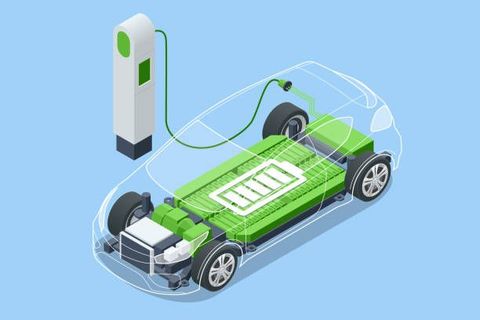
Explore Electric Vehicle Batteries: A Complete Guide to Types, Technology, and Applications
Updated: November 03, 2026
Read More