Explore Wedding Carriage Rentals: An Informative Guide to Options, Styles, and Details
A wedding carriage is a traditional form of wedding transportation in which a horse-drawn vehicle is used to carry the bride, groom, or wedding party. The idea combines transportation with a ceremonial entrance, making the carriage part of the visual and cultural character of a wedding.
Wedding carriages can range from historically styled vehicles to contemporary designs inspired by traditional coaches. They may be used for a short ceremony entrance, movement between venues, photographs, or a planned wedding carriage ride.
The use of horse-drawn transportation varies considerably by country, city, venue, weather conditions, and animal-welfare requirements. In India, additional attention is relevant because the use of horses in wedding processions and public events is governed by animal-welfare laws and local requirements.
What Is a Wedding Carriage?
A wedding carriage is a carriage adapted or selected for ceremonial wedding transportation. A horse-drawn wedding carriage generally consists of a carriage, one or more horses, harness equipment, and a trained driver or handler.
The design can influence the overall appearance of the wedding. Common styles include:
- Vintage wedding carriage: Inspired by historical carriage designs and traditional European coaches.
- Classic wedding carriage: Uses conventional shapes and decorative details.
- Traditional wedding carriage: Often associated with regional customs or ceremonial processions.
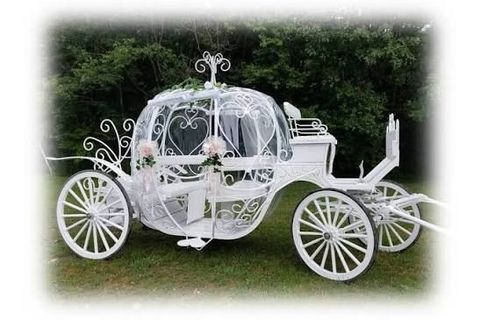
- Cinderella wedding carriage: Designed around the fairy-tale coach appearance.
- White wedding carriage: Uses a predominantly white exterior and is often selected for formal ceremonies.
- Luxury wedding carriage: Generally emphasizes elaborate interiors, decorative finishes, and ceremonial styling.
- Modern wedding carriage: Combines contemporary design elements with the basic carriage concept.
A bridal carriage rental may be planned specifically for the bride's arrival, while a bride and groom carriage can be used after the ceremony or for photographs.
How Wedding Carriage Transportation Is Used
Wedding carriages can serve several different purposes rather than simply replacing a conventional vehicle.
A couple may use a carriage for:
- Arrival at the wedding ceremony
- Departure after the ceremony
- Movement between nearby wedding locations
- A short ceremonial procession
- Wedding photography
- A traditional entrance
- A planned carriage ride around a suitable venue or area
The route is particularly important. A carriage designed for ceremonial use may not be appropriate for every road, traffic condition, distance, or weather situation.
Why Wedding Carriage Transportation Matters
Wedding transportation affects timing, accessibility, safety, and coordination. A carriage can also have cultural or symbolic significance, particularly in weddings where traditional processions are important.
For event planners and families, understanding the practical requirements can prevent problems such as unsuitable routes, insufficient loading areas, traffic conflicts, or weather-related complications.
Animal welfare is another important consideration. Horses can be sensitive to loud sounds, crowds, sudden movements, heat, and unfamiliar surroundings. India's Prevention of Cruelty to Animals Act, 1960 prohibits conduct that causes unnecessary pain or suffering and specifically addresses the treatment and use of animals.
This means wedding carriage planning should consider the welfare of the horse alongside the transportation requirements of the wedding.
Comparing Common Wedding Carriage Styles
Different carriage styles create different visual and practical characteristics.
| Carriage style | Typical appearance | Common wedding use |
|---|---|---|
| Vintage | Historical coach-inspired design | Traditional or heritage weddings |
| Classic | Formal and balanced styling | Ceremony entrances |
| White carriage | Light-colored decorative design | Formal wedding themes |
| Cinderella | Fairy-tale coach appearance | Themed weddings |
| Luxury | Elaborate finishes and interiors | Formal ceremonial events |
| Modern | Contemporary interpretation | Modern wedding themes |
| Traditional | Regional or heritage influence | Cultural ceremonies |
The style should be considered together with the venue, route, dress, photography requirements, and available space.
Planning a Wedding Carriage Ride
Planning a wedding carriage ride requires more than selecting a visually appropriate carriage. The route, timing, venue access, weather, traffic, and horse welfare all need consideration.
A useful planning checklist includes:
- Confirm the exact starting and ending points.
- Check whether the carriage can enter and leave the venue safely.
- Examine road surfaces and route conditions.
- Allow additional time for slower travel.
- Consider weather and temperature conditions.
- Identify a suitable waiting and loading area.
- Keep the route away from unnecessary hazards.
- Coordinate arrival timing with the ceremony schedule.
- Confirm emergency and contingency arrangements.
- Make sure appropriate safety equipment and trained handlers are present.
For a bride and groom carriage, the seating arrangement should also be considered. Wedding clothing can be large or restrictive, so the carriage entrance, seating space, and steps should be appropriate for the passengers.
Recent Trends in Wedding Transportation
Wedding transportation has increasingly become part of the overall visual design of a wedding. In India, recent reporting has highlighted growing interest in distinctive wedding entrances, including vintage cars and other statement vehicles. At the same time, some event participants have moved away from horse-drawn transportation because of concerns about horses reacting to loud music and crowded wedding environments.
This suggests that wedding transportation choices are becoming more diverse. Instead of one standard format, couples and planners may consider vintage automobiles, modern vehicles, traditional transport, or horse-drawn carriages depending on the setting and cultural context.
Animal welfare has also remained an active policy area. The Animal Welfare Board of India published several animal-welfare resources and enforcement-related materials during 2025, including a law-enforcement handbook and veterinary-officer handbook dated February 27, 2025.
These developments reinforce the importance of responsible planning when animals are involved in public celebrations.
Laws and Animal-Welfare Requirements in India
Wedding carriage activities involving horses can be affected by India's animal-welfare framework. The Prevention of Cruelty to Animals Act, 1960 is a central law addressing unnecessary pain and suffering. Section 11 includes provisions concerning over-driving, over-loading, and the use or transport of animals in ways that cause unnecessary pain or suffering.
The Prevention of Cruelty to Animals (Transport of Animals on Foot) Rules, 2001 also contain provisions relevant to horses, ponies, mules, and donkeys. For example, the rules establish limits relating to travel time, distance, rest, and temperature when animals are transported on foot.
The Animal Welfare Board of India also publishes guidance concerning horses and animal transportation. Its information emphasizes appropriate ventilation, watering, feeding, travel conditions, and avoiding unnecessary restrictions on an animal's movement.
Local authorities can impose additional requirements involving roads, public gatherings, traffic management, venue access, or animal use. Therefore, requirements should be checked with the relevant municipal, police, veterinary, or other competent authority before a wedding event.
Wedding Carriage Safety Considerations
Safety applies to both passengers and horses. A responsible wedding carriage arrangement should account for the physical condition of the horse, harness and carriage condition, driver competence, route suitability, crowd control, and weather.
Important considerations include:
- Horses should be physically fit for the intended activity.
- Harnesses should be correctly fitted and maintained.
- The carriage should be inspected before use.
- The driver should understand the route and surrounding traffic.
- Passengers should remain seated as instructed.
- Loud noises and sudden movements around the horse should be minimized.
- Extreme heat or unsuitable weather should be taken seriously.
- Emergency procedures should be established before the event.
The Animal Welfare Board of India also maintains specific resources on the use and transport of equines and lists relevant animal-welfare rules for public reference.
Useful Tools and Resources
Several resources can help with wedding carriage planning and research.
Digital maps: Mapping applications can help examine road width, traffic conditions, route length, turns, venue entrances, and alternative routes.
Weather applications: Forecast tools can help identify rain, high temperatures, wind, or other conditions that may affect an outdoor carriage arrangement.
Wedding planning templates: A transportation checklist can record pickup locations, arrival times, passenger details, route information, emergency contacts, and contingency arrangements.
Animal-welfare resources: The Animal Welfare Board of India provides access to relevant laws, rules, guidelines, and educational materials.
India Code: The official legal database can be used to review central legislation, including the Prevention of Cruelty to Animals Act.
Frequently Asked Questions
What is a horse-drawn wedding carriage?
A horse-drawn wedding carriage is a carriage pulled by one or more horses and used as ceremonial transportation during a wedding. It may be used for an entrance, departure, photography, or a short planned ride.
What are the most common wedding carriage styles?
Common styles include vintage, classic, traditional, white, luxury, modern, and Cinderella-inspired carriages. The appropriate style depends on the wedding theme, venue, and practical requirements.
Is a wedding carriage suitable for every venue?
No. The venue must have appropriate access, space, road or pathway conditions, and permissions where applicable. Narrow entrances, steep surfaces, heavy traffic, crowds, or unsuitable ground conditions can make carriage use impractical.
What safety factors should be considered?
The horse's condition, harness, carriage, driver, route, weather, crowd conditions, and passenger behavior should all be considered. Animal-welfare requirements should also be followed.
Are horse-drawn wedding carriages regulated in India?
Animal use is subject to India's animal-welfare framework, including the Prevention of Cruelty to Animals Act and related rules. Additional local requirements may apply depending on the location and event.
Conclusion
Wedding carriage transportation combines ceremonial travel with traditional visual elements. Options range from vintage and classic coaches to white, luxury, modern, and Cinderella-inspired designs.
The most important considerations extend beyond appearance. Route suitability, venue access, weather, passenger safety, horse welfare, and applicable regulations all influence whether a carriage is appropriate for a particular wedding.
In India, the legal framework surrounding animal welfare is especially relevant when horses are used in wedding transportation. Reviewing official regulations and consulting the appropriate local authorities can help event planners understand the requirements before including a horse-drawn carriage in a wedding program.

Related Post...
Explore Wedding Carriage Rentals: An Informative Guide to Options, Styles, and Details
Updated: November 25, 2026
Read More
Learn About Carpet Cleaning Machine Rentals: Tips, Knowledge, and Helpful Resources
Updated: November 21, 2026
Read More
Learn About Wedding Stage Rentals: Tips, Knowledge, and Helpful Resources
Updated: November 20, 2026
Read More