Learn About Cold Storage Rentals: Essential Details, Knowledge, and Useful Resources
Cold storage rentals refer to the use of refrigerated or temperature-controlled warehouse space for storing products that must remain within specific environmental conditions. These facilities are designed to maintain suitable temperatures for perishable goods, frozen products, medicines, agricultural produce, and other temperature-sensitive materials.
Unlike conventional warehouses, a temperature controlled warehouse uses refrigeration equipment, insulation, monitoring systems, and operational procedures to maintain the required storage environment. Depending on the products stored, a facility may provide chilled rooms, frozen storage areas, or specialized environments with controlled humidity.
Cold storage warehouse rental is relevant to businesses that need temporary or ongoing storage capacity without managing an entire refrigerated facility themselves. Requirements can vary according to product type, storage duration, quantity, packaging, and temperature specifications.
Common Types of Cold Storage Facilities
Different products require different storage conditions. Selecting an appropriate commercial cold storage rental arrangement starts with understanding the available facility types.
Chilled storage: Maintains temperatures above freezing for products such as dairy items, fresh produce, and certain prepared foods.
Frozen storage: Keeps products frozen at specified temperatures, commonly around −18°C or lower for many frozen foods.
Multi-temperature warehouses: Provide separate zones for products with different temperature requirements.
Pharmaceutical cold storage: Supports temperature-sensitive medicines and biological materials under validated storage conditions.
Specialized industrial cold storage space: Accommodates specific materials or processes that require controlled temperatures or humidity.
A refrigerated warehouse rental arrangement may include storage space, handling procedures, inventory records, temperature monitoring, and loading facilities. However, the exact capabilities depend on the facility and the agreement.
How Cold Storage Warehousing Works
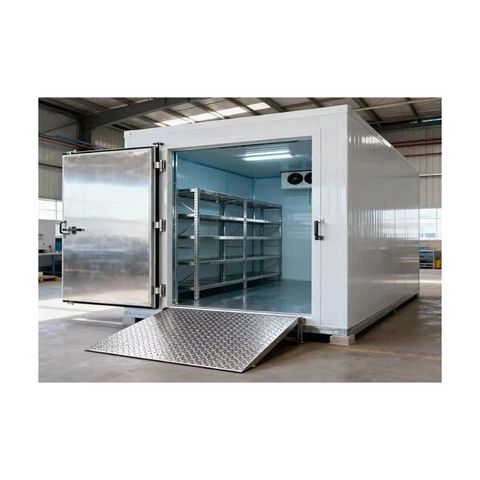
A cold storage facility uses refrigeration systems to remove heat from an enclosed space. Insulated walls, ceilings, floors, and doors help limit heat transfer, while refrigeration equipment maintains the required temperature.
Operational controls are equally important. Staff must manage door openings, loading activities, airflow, product placement, and equipment maintenance to avoid unnecessary temperature changes.
Typical warehouse processes include:
Receiving products and checking their condition.
Recording product identification and batch information.
Placing goods in the appropriate temperature zone.
Monitoring temperatures and documenting deviations.
Maintaining inventory records and tracking product movement.
Preparing goods for dispatch while following required handling procedures.
These processes help protect product quality and support traceability throughout storage.
| Storage requirements vary by crop and maturity. | |
| Protection of temperature-sensitive goods | Product-specific temperature limits must be followed. |
| Better distribution coordination | Refrigerated transport must maintain appropriate conditions. |
| Product traceability | Batch records and monitoring logs should be maintained. |
Cold storage does not automatically prevent every form of spoilage. Some products have limited shelf lives even under refrigeration, and temperature control cannot reverse damage that occurred before arrival.
Recent Developments in Cold Chain Logistics
Cold chain logistics continues to evolve through infrastructure expansion, digital monitoring, improved refrigeration systems, and stronger attention to food safety.
India's cold chain policy updates in 2025
On 22 May 2025, India's Ministry of Food Processing Industries issued revised operational guidelines for the Integrated Cold Chain and Value Addition Infrastructure component of the Pradhan Mantri Kisan Sampada Yojana (PMKSY). The program covers infrastructure such as pre-cooling, multi-temperature cold storage, packing facilities, freezing systems, and refrigerated vehicles.
On 27 May 2025, the ministry announced an application process for eligible entities proposing cold chain projects under the scheme. The announcement described the application period and directed applicants to the revised guidelines.
A government press note published on 29 October 2025 also reported additional funding approved for PMKSY in July 2025, including support for multi-product food irradiation infrastructure. Food irradiation is a separate preservation technology that can complement certain supply chains; it does not replace appropriate temperature control.
Technology trends in refrigerated warehousing
Current developments include:
Digital temperature monitoring: Sensors record storage conditions and can alert staff when temperatures move outside defined limits.
Inventory management software: Digital records help track batch numbers, expiry dates, product locations, and dispatch activity.
Energy-efficient refrigeration: Improved insulation, equipment controls, and heat recovery can help reduce energy consumption.
Automated warehouse operations: Warehouse management systems can coordinate inventory movements and improve record accuracy.
Connected cold chain transport: Temperature data loggers and tracking systems help monitor refrigerated shipments during transit.
These technologies can improve visibility, but reliable results depend on proper installation, calibration, maintenance, and staff training.
Laws and Regulations for Cold Storage in India
Cold storage operators must consider the regulations relevant to the products they handle and the activities they perform. Food storage, pharmaceutical distribution, warehouse operations, fire safety, and environmental compliance may involve different authorities and requirements.
Food Safety and Standards Authority of India (FSSAI)
Food businesses must follow applicable food safety and hygiene requirements. Storage facilities should protect products from contamination, maintain suitable temperature and humidity conditions, and separate incompatible products.
FSSAI guidance identifies 5°C or below for potentially high-risk food and −18°C or below for frozen food in the relevant food-handling context. These values should not be treated as universal requirements for every product; specific food standards and product instructions must also be checked.
Food Safety and Standards (Licensing and Registration of Food Businesses) Regulations, 2011
These regulations establish licensing and registration requirements for relevant food businesses. Applicable obligations depend on the nature and scale of the activity, so operators should confirm the current requirements with FSSAI or the appropriate state authority.
Integrated Cold Chain and Value Addition Infrastructure
Under PMKSY, eligible projects may receive government assistance subject to the current scheme guidelines, application conditions, and approval process. The scheme supports integrated infrastructure connecting production, storage, processing, and distribution. It is not a blanket entitlement for every warehouse or rental arrangement.
Other compliance considerations
Depending on the facility and products involved, relevant requirements may include:
State or local building and fire safety rules.
Electricity and refrigeration equipment safety requirements.
Applicable environmental and refrigerant-management rules.
Pharmaceutical storage and distribution requirements for regulated medicines.
Warehouse registration or documentation obligations where applicable.
Regulatory requirements can change. Businesses should check official notifications and obtain qualified guidance when determining their specific obligations.
Tools and Resources for Cold Storage Planning
Several digital tools and official resources can help users understand warehouse requirements and evaluate storage conditions.
Ministry of Food Processing Industries: Visit for cold chain scheme guidelines, policy announcements, and project information.
FSSAI: Visit for food safety regulations, hygiene guidance, and relevant licensing information.
Warehousing Development and Regulatory Authority: Visit for information about warehouse registration and applicable regulatory requirements.
Temperature data loggers: These devices record temperature readings over time and help identify potential deviations.
Warehouse management systems: These tools track stock quantities, storage locations, batches, expiry dates, and product movements.
Digital inventory spreadsheets: Smaller operations can record product descriptions, arrival dates, temperature requirements, quantities, and dispatch dates in structured spreadsheets.
Refrigeration monitoring systems: Connected sensors and alarm systems can help staff respond to equipment faults or temperature excursions.
A Practical Cold Storage Planning Checklist
Before choosing a cold storage facility rental arrangement, consider the following factors:
Identify the product's required temperature and humidity range.
Estimate the quantity, dimensions, and storage duration of inventory.
Confirm whether chilled, frozen, or multiple temperature zones are necessary.
Check monitoring systems, backup power arrangements, and emergency procedures.
Review hygiene practices, pest management, and product segregation.
Confirm loading access and refrigerated transport arrangements.
Understand inventory reporting, access rules, and responsibility for damaged goods.
Verify relevant licenses, registrations, and documented operating procedures.
A clear checklist helps users compare facilities based on their actual operational needs rather than relying on general descriptions.
Frequently Asked Questions
What is a cold storage warehouse rental?
It is an arrangement for using refrigerated or temperature-controlled warehouse space to store products that require specific environmental conditions.
What is the difference between chilled and frozen storage?
Chilled storage keeps products cold without necessarily freezing them. Frozen storage maintains products at temperatures low enough to keep them frozen, commonly −18°C or below for many frozen foods.
Which products require refrigerated warehouse rental?
Products may include dairy, meat, seafood, selected fruits and vegetables, frozen foods, and certain temperature-sensitive medicines. The required conditions depend on the product.
How does temperature monitoring support cold chain logistics?
Monitoring systems record storage conditions, provide alerts when defined limits are exceeded, and create records that can support quality checks and investigations.
What should be checked before using commercial freezer storage?
Confirm temperature specifications, available capacity, hygiene procedures, monitoring records, emergency plans, inventory controls, product segregation, and applicable regulatory compliance.
Conclusion
Cold storage rentals support industries that depend on controlled temperatures to maintain product quality and manage inventory. Cold storage warehouse rental, commercial cold storage rental, industrial cold storage space, and refrigerated warehouse rental all serve different operational needs, depending on the products and required conditions.
Understanding refrigeration systems, inventory procedures, cold chain logistics solutions, and relevant regulations helps businesses plan storage activities more effectively. Developments in digital monitoring, energy efficiency, and integrated cold chain infrastructure are also changing how temperature-sensitive products move through supply chains.
The most important considerations remain product suitability, reliable temperature control, accurate documentation, and compliance with applicable safety requirements. With informed planning and appropriate monitoring, cold storage facilities can contribute to more reliable distribution and better management of temperature-sensitive goods.

Related Post...
Learn About Cold Storage Rentals: Essential Details, Knowledge, and Useful Resources
Updated: October 27, 2026
Read More