Learn About VR in Automotive Design: Useful Knowledge, Tips, and Resources
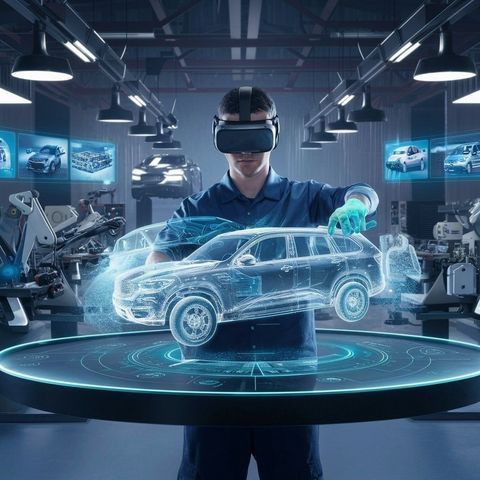
Virtual reality (VR) in automotive design refers to the use of immersive digital environments to view, inspect, and interact with virtual vehicle models. Instead of examining a vehicle only on a conventional computer screen, designers and engineers can use VR or extended reality (XR) equipment to experience a digital model at a more realistic scale.
Automotive design software, automotive CAD software, and automotive engineering software provide the digital models used in these environments. VR then adds another layer by allowing people to examine proportions, interiors, visibility, ergonomics, materials, and other design characteristics from different viewpoints.
The technology exists because vehicle development involves many interconnected decisions. Exterior shape, interior space, controls, seating, visibility, materials, aerodynamics, manufacturing requirements, and safety considerations all need to work together. A two-dimensional screen can communicate much of this information, but immersive environments can provide additional spatial context.
VR automotive design is therefore not simply about creating attractive virtual presentations. It can become part of a wider design review process in which designers, engineers, and other specialists examine a digital vehicle before or alongside physical development.
Modern automotive workflows increasingly connect CAD models, visualization systems, simulation technologies, and immersive environments. Siemens describes immersive automotive design as a way to experience CAD creations at full scale and examine areas such as proportions, ergonomics, visibility, and assembly.
Why VR Matters in Modern Vehicle Development
Vehicle design is becoming increasingly digital. Electric vehicles, advanced driver-assistance systems, connected interiors, larger displays, new materials, and software-defined features have added complexity to the development process.
VR can help teams examine this complexity in a shared three-dimensional environment.
Important applications include:
Full-scale design review: Designers can experience a virtual vehicle at approximately life size and examine its overall proportions.
Interior evaluation: Seats, dashboards, displays, steering wheels, door panels, and controls can be reviewed from the driver's or passenger's perspective.
Ergonomic assessment: Designers can examine reach, visibility, seating position, and interaction with interior components.
Design collaboration: Teams in different locations can review the same digital model within an immersive environment.
Early problem identification: Potential issues involving visibility, packaging, spatial relationships, or assembly can be identified before later development stages.
Design communication: A three-dimensional model can make complex design ideas easier to communicate among creative and engineering teams.
The value of VR becomes particularly clear when several disciplines need to evaluate the same vehicle concept. Instead of reviewing separate drawings or isolated components, teams can examine the vehicle as a complete system.
For example, an interior designer may focus on visual appearance, while an engineer examines packaging and an HMI specialist studies display placement. A shared immersive model can help these perspectives meet in the same design review.
| Automotive Design Area | Possible VR Application |
|---|---|
| Exterior design | Proportion and surface evaluation |
| Interior design | Space, layout, and visual review |
| Ergonomics | Seating, reach, and visibility assessment |
| HMI design | Display and control placement |
| Engineering | Component and assembly review |
| Collaboration | Shared immersive design sessions |
| Visualization | Realistic vehicle presentation |
| Prototyping | Comparison between physical and digital models |
VR does not replace engineering validation or physical testing. Instead, it can complement conventional CAD, simulation, prototyping, and testing workflows.
Recent Developments in VR Automotive Design
The automotive VR landscape has continued to develop during 2026, particularly around spatial computing, mixed reality, real-time visualization, and connected design workflows.
On March 17, 2026, Autodesk announced that Immersive for Autodesk VRED was being brought to Apple Vision Pro through collaboration with Apple, NVIDIA, and Innoactive. The technology was designed to support immersive automotive design reviews through spatial computing and enterprise XR streaming.
By May 20, 2026, Autodesk reported that Immersive for Autodesk VRED had become available on the Apple Vision Pro App Store. The workflow allows automotive teams to enter VRED scenes and experience vehicle designs at full scale.
Another important development has been the movement from VR as a presentation tool toward VR and XR as active design environments. Autodesk's 2026 automotive discussions highlighted the increasing use of immersive review earlier in the design process, rather than waiting until a vehicle concept is nearly complete.
In June 2026, Autodesk also discussed visualization workflows involving richer environments, real-time rendering, XR, CAVEs, Powerwalls, and streamed sessions. The discussion included 3D Gaussian splatting as an emerging visualization approach.
Renault and Granstudio provided another notable 2026 example. Their work combines automated visualization with mixed reality, allowing designers to evaluate digital vehicle concepts alongside physical elements. Autodesk reported that Renault's visualization platform was supporting hundreds of users and thousands of models and VR scenes.
These developments indicate a broader trend: VR is increasingly being connected with CAD, visualization, physical prototypes, tracking systems, and collaborative engineering workflows.
Laws, Standards, and Policies in India
VR itself is generally a design technology rather than a separate vehicle approval category. However, the vehicle designs evaluated through VR ultimately need to satisfy applicable Indian automotive requirements.
In India, vehicle development is influenced by the Central Motor Vehicles Rules (CMVR), Automotive Industry Standards (AIS), type-approval requirements, and other applicable regulations administered through the country's automotive regulatory framework.
For example, AIS documents provide technical requirements and testing-related information for different vehicle categories and regulatory areas. The Ministry of Road Transport and Highways publishes relevant automotive standards and regulatory material.
This distinction is important. A VR model can help designers evaluate the digital representation of a vehicle, but an immersive review does not by itself establish legal compliance.
Depending on the vehicle and its intended use, development teams may need to consider requirements related to:
Vehicle dimensions and construction
Lighting and signaling equipment
Braking systems
Safety requirements
Emissions and powertrain requirements
Electrical and electronic systems
Driver and passenger protection
Type approval and conformity requirements
VR can support early design evaluation, but formal compliance normally requires appropriate engineering analysis, testing, documentation, and approval procedures.
Tools and Resources for VR Automotive Design
Several categories of tools can support immersive automotive design workflows.
Automotive CAD software is used to create and modify vehicle geometry. CAD models may include exterior surfaces, interior components, mechanical parts, and engineering structures.
Automotive visualization software converts design data into detailed visual environments. Autodesk VRED, for example, is used for automotive visualization and immersive design review.
Automotive engineering software can connect design information with engineering analysis, simulation, and development processes. Siemens provides immersive engineering workflows that connect CAD models with VR and XR environments.
VR and XR hardware includes head-mounted displays, spatial-computing devices, motion-tracking equipment, and other immersive interfaces.
Collaboration platforms can help geographically distributed teams review the same digital design and exchange feedback.
Useful resources include:
Automotive CAD documentation and learning materials
Automotive visualization software documentation
VR/XR hardware documentation
Automotive Industry Standards published by relevant Indian authorities
Vehicle safety and type-approval references
CAD modeling tutorials
Digital prototyping guides
Automotive design research and technical publications
When selecting a workflow, compatibility between CAD formats, visualization software, VR hardware, tracking systems, and engineering data should be considered.
Practical Tips for Using VR in Automotive Design
A successful VR workflow depends on more than having a headset. The underlying digital model and review process are equally important.
Start with a clear design objective. A review focused on exterior proportions may require different data and interaction methods from an interior ergonomics study.
Keep the digital model appropriately optimized for immersive viewing. Very complex models can affect real-time performance, so teams may need suitable levels of detail.
Use accurate vehicle dimensions and coordinate systems. Small alignment errors can affect the perception of interior space, seating position, and component relationships.
Include multiple disciplines where appropriate. Designers, engineers, ergonomics specialists, HMI teams, and manufacturing specialists can identify different types of issues.
Document findings after each immersive review. VR should contribute to an iterative design process rather than becoming an isolated demonstration.
Finally, remember that immersive visualization is one part of vehicle development. Important engineering and safety decisions should be supported by appropriate simulation, physical testing, standards, and technical validation.
Frequently Asked Questions
What is VR in automotive design?
VR in automotive design uses virtual reality environments to help designers and engineers view and interact with digital vehicle models. It can support design reviews, visualization, ergonomics, collaboration, and spatial evaluation.
How is VR different from automotive CAD software?
CAD software is primarily used to create and modify digital models. VR provides an immersive way to experience and evaluate those models. In many workflows, CAD and VR work together rather than replacing one another.
Can VR be used for vehicle interior design?
Yes. VR can help teams examine seating positions, dashboard layouts, display placement, visibility, reach, door areas, and overall interior space. It can provide a more immersive perspective than a conventional monitor.
Does VR replace physical vehicle prototypes?
No. VR can reduce dependence on some early physical mock-ups and support earlier design evaluation, but physical prototypes and formal engineering tests remain important for many aspects of vehicle development.
What are the main benefits of VR automotive design?
The main benefits include full-scale visualization, improved spatial understanding, collaborative design review, earlier identification of certain design issues, and better communication between different teams.
Conclusion
VR in automotive design is becoming an increasingly connected part of digital vehicle development. By combining automotive CAD software, visualization systems, engineering data, and immersive hardware, design teams can examine vehicles from perspectives that are difficult to reproduce on a conventional screen.
The technology is particularly useful for full-scale design reviews, interior evaluation, ergonomics, collaboration, and communication. Recent developments in spatial computing, XR streaming, mixed reality, and automated visualization are also expanding how immersive environments can be integrated into everyday automotive workflows.
At the same time, VR should be understood as a supporting technology rather than a substitute for engineering validation. Vehicle development still depends on CAD, simulation, physical testing, regulatory requirements, and technical expertise.
As automotive design becomes more digital and multidisciplinary, VR can provide another practical environment for understanding how a vehicle looks, fits, functions, and feels before important development decisions are finalized.

Related Post...
Explore Social Impacts of Robotics: A Complete Guide to Benefits, Challenges, and Social Change
Updated: October 23, 2026
Read More
Explore Network Access Control: Essential Tips, Insights, and Security Strategies.
Updated: October 19, 2026
Read More
Learn the Basics of AI Ethics in Robotics: An Overview of Knowledge, Facts, and Key Principles
Updated: October 23, 2026
Read More