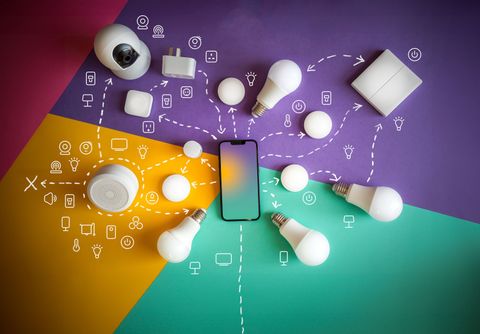
Unlike traditional electronic devices that operate independently, connected IoT devices can communicate with other devices or digital platforms. Depending on their design, they may automatically report measurements, respond to instructions, or trigger actions based on predefined conditions.
For example, a temperature sensor in a warehouse can send readings to a cloud-based dashboard. If the temperature rises beyond a specified threshold, the system can notify an operator. Similarly, a smart thermostat can adjust heating or cooling according to programmed settings and available sensor information.
IoT exists to connect physical environments with digital information systems. This connection helps people monitor equipment, understand changing conditions, automate routine tasks, and make decisions based on timely data.
How IoT Technology Works
An IoT system generally contains several interconnected components.
Sensors and devices: Collect information such as temperature, movement, humidity, pressure, location, or energy consumption.
Connectivity: Transfers information through technologies such as Wi-Fi, Bluetooth, cellular networks, Ethernet, or specialized low-power networks.
Data processing: Devices, gateways, edge computers, or cloud platforms process incoming information.
Applications and dashboards: Present measurements, alerts, reports, and controls to users.
Automation and analytics: Apply rules or analytical models to identify patterns and trigger appropriate actions.
The exact architecture depends on the application. A simple smart light may operate locally, while an industrial monitoring system may connect thousands of sensors to a combination of gateways, edge computing systems, and cloud infrastructure.
The Role of Cloud-Based IoT Solutions
Cloud-based IoT solutions use remotely hosted computing infrastructure to store, process, analyze, and manage information generated by connected devices. They can help organizations monitor equipment across multiple locations without maintaining every computing component on-site.
Cloud computing services may provide device registries, message processing, databases, data analytics, identity management, and application hosting. These capabilities can support systems that need to process large volumes of sensor data.
However, cloud connectivity is not essential for every IoT application. Some devices operate locally or use edge computing when low latency, limited connectivity, data privacy, or operational reliability is especially important.
Common Types of IoT Applications
| Application area | Typical example | Main purpose |
|---|---|---|
| Smart homes | Connected lights and thermostats | Improve control and automation |
| Manufacturing | Machine-condition sensors | Monitor equipment performance |
| Agriculture | Soil-moisture monitoring | Support irrigation decisions |
| Healthcare | Connected monitoring devices | Record selected health measurements |
| Transportation | Fleet tracking systems | Monitor vehicle location and usage |
| Smart cities | Environmental sensors | Measure traffic, air quality, or water conditions |
These applications illustrate how IoT can connect real-world measurements with digital decision-making systems.
Why IoT Matters for Businesses and Everyday Life
IoT can help organizations improve operational visibility, automate repetitive tasks, and identify problems earlier. Its value depends on the quality of collected data, the suitability of the technology, and how effectively the system fits existing workflows.
IoT solutions for business are commonly used in manufacturing, logistics, agriculture, energy management, and building operations. For example, sensors can monitor machine vibration and temperature, allowing maintenance teams to investigate unusual readings before equipment failure occurs.
Industrial IoT platforms connect machinery, sensors, production systems, and analytical applications. They can help organizations monitor production conditions, analyze equipment performance, and coordinate maintenance activities.
Smart home automation systems apply similar principles to residential settings. Connected lighting, security sensors, thermostats, and appliances can be controlled through applications or automated routines. Their capabilities vary by device, network compatibility, and manufacturer support.
IoT software development brings together embedded programming, device communication, cloud integration, dashboards, and data processing. Careful planning is important because connected devices may remain in operation for years and require ongoing security updates.
IoT Cybersecurity Solutions and Common Risks
Connected devices can introduce security risks when they use weak passwords, outdated software, insecure communication, or excessive permissions. A compromised device may expose personal information, disrupt operations, or provide an entry point into a wider network.
IoT cybersecurity solutions focus on protecting devices, communications, applications, and collected information throughout the device lifecycle.
Recommended practices include:
Use unique credentials and strong authentication.
Encrypt sensitive information when appropriate.
Install verified firmware and security updates.
Separate IoT devices from sensitive business systems where practical.
Limit access according to user responsibilities.
Monitor unusual network activity and device behavior.
Review privacy settings and data-retention practices.
Maintain an inventory of connected devices and their support periods.
Security should be considered during planning and development rather than added only after deployment. Internet of Things consulting and technical assessments may help organizations evaluate architecture, integration requirements, privacy considerations, and operational risks before implementing a larger system.
Recent Updates in IoT Technology and Cybersecurity
Several developments during 2025 and 2026 have strengthened the focus on device security and lifecycle management.
25 November 2025: Updated guidance for secure device onboarding
The US National Institute of Standards and Technology (NIST) published final guidance on trusted IoT device onboarding and lifecycle management. The publications explain approaches for establishing trust before devices join networks, assigning appropriate network credentials, and managing connected devices throughout their operational lives.
20 April 2026: Revised IoT manufacturer guidance
NIST published Revision 1 of IR 8259, Foundational Cybersecurity Activities for IoT Product Manufacturers. The guidance addresses cybersecurity activities across product development and ongoing support, including communication about maintenance and the end of product support.
11 September 2026: European Cyber Resilience Act reporting obligations
The European Union's Cyber Resilience Act reporting requirements began applying on this date. Manufacturers covered by the rules must report actively exploited vulnerabilities and certain severe security incidents affecting products with digital elements. The requirements include an early warning within 24 hours of awareness and a fuller notification within 72 hours, subject to the regulation's specific conditions. The Act's main requirements are scheduled to apply from 11 December 2027.
These developments reflect a broader shift toward secure device onboarding, clearer manufacturer responsibilities, and security management throughout the life of connected products.
IoT Laws, Policies, and Standards in India
India's IoT ecosystem is influenced by telecommunications regulation, cybersecurity guidance, data protection requirements, and technical standards. The exact obligations depend on the device, the information it processes, the industry, and how the technology is deployed.
Digital Personal Data Protection Act, 2023
India's Digital Personal Data Protection Act, 2023 establishes a framework for processing digital personal data. IoT systems that collect identifiable personal information may fall within its scope, subject to the Act's provisions, applicable rules, commencement notifications, and relevant exemptions.
Organizations should assess what information devices collect, why it is needed, how long it is retained, and what safeguards apply.
Information Technology Act, 2000
The Information Technology Act provides a broader legal framework for electronic records, electronic transactions, and certain cybersecurity-related matters. Applicable provisions may be relevant when connected systems involve unauthorized access, data compromise, or other covered activities.
Telecommunications and technical requirements
IoT devices using radio equipment or cellular connectivity may be subject to applicable telecommunications, spectrum, equipment approval, and technical requirements. Manufacturers and implementers should check current rules for the specific device category.
Consumer IoT cybersecurity guidance
On 26 November 2025, India's Department of Telecommunications published Release 2.0 of its Code of Practice for Securing Consumer IoT. The document addresses security considerations for connected consumer devices, including authentication, encryption, firmware updates, and network protection. Its status and applicability should be checked against current official guidance.
Helpful IoT Tools and Learning Resources
The following resources provide technical documentation, cybersecurity guidance, and practical learning materials.
AWS IoT: Documentation about connected-device management, messaging, and cloud integration.
Microsoft Azure IoT: Information about IoT architecture and cloud-connected device systems.
Eclipse Mosquitto:An open-source MQTT message broker useful for learning IoT communication.
Node-RED:A flow-based programming tool for connecting devices, APIs, and data systems.
NIST Cybersecurity for IoT:Guidance for manufacturers and organizations managing connected devices.
OWASP Internet of Things Project:Security guidance and information about common IoT risks.
When comparing industrial IoT platforms or cloud computing services, review device compatibility, data ownership, security controls, integration options, scalability, and the duration of technical support.
Frequently Asked Questions
What is the Internet of Things in simple terms?
IoT is a network of physical devices that collect and exchange information through sensors, software, and communication technologies. Examples include smart thermostats, connected vehicles, and industrial monitoring equipment.
How do cloud-based IoT solutions work?
Connected devices send information to cloud infrastructure or a gateway. The system can store and analyze the data, display results on dashboards, and trigger alerts or automated actions.
Are IoT devices secure?
Their security depends on design, configuration, updates, authentication, and network protection. No connected device should be assumed completely secure, so ongoing monitoring and maintenance are important.
What is the difference between IoT and industrial IoT?
General IoT includes consumer, public-sector, and commercial applications. Industrial IoT focuses on connected equipment and processes in areas such as manufacturing, energy, transportation, and infrastructure.
How can a business begin implementing IoT?
Start by identifying a specific operational problem, selecting measurable objectives, and evaluating suitable devices and connectivity. Test the system on a limited scale, assess cybersecurity and privacy risks, and establish maintenance procedures before expanding.
Conclusion
The Internet of Things connects physical devices with digital systems to support monitoring, automation, and data-driven decisions. Cloud-based IoT solutions, industrial IoT platforms, smart home automation systems, and IoT software development all contribute to this growing technology ecosystem.
However, successful implementation requires more than connecting devices. Reliable connectivity, compatible systems, useful data, cybersecurity, privacy protection, and long-term maintenance are equally important.
By understanding the technology, exploring established learning resources, and following applicable regulations, individuals and organizations can make informed decisions about IoT adoption and its practical role in everyday life and industry.