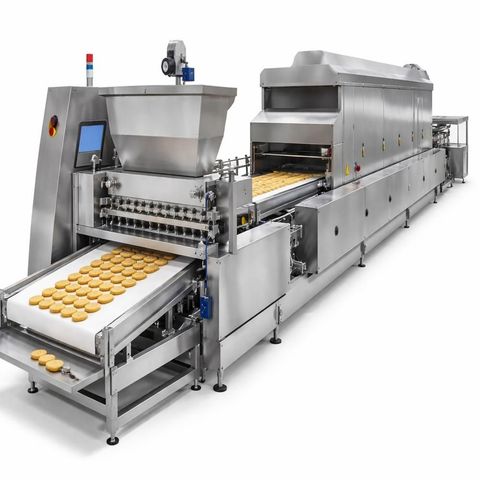
Explore Coffee Roasting Machines: An Informative Guide to Functions and Applications
Coffee roasting machines are equipment designed to heat green coffee beans under controlled conditions until they develop the color, aroma, flavor, and physical characteristics associated with roasted coffee. Roasting is an important stage in coffee processing because heat causes chemical and physical changes within the beans.
Coffee roasters range from small machines intended for limited batches to large commercial and industrial systems used in dedicated roasting facilities. Their design can vary according to capacity, heating method, airflow arrangement, automation, cooling system, and control technology.
Understanding these machines is useful for coffee processors, roasters, food businesses, equipment operators, and people interested in coffee production technology.
Understanding Coffee Roasting Machines
A coffee roasting machine generally contains a roasting chamber, heating system, airflow mechanism, temperature controls, and a cooling arrangement. Some machines use a rotating drum, while others use different roasting chamber designs.
During roasting, green coffee beans are exposed to controlled heat. Moisture is gradually removed, the beans change color, and chemical reactions create many of the compounds associated with roasted coffee aroma and flavor.
Common types include:
- Drum coffee roaster: Beans are roasted inside a rotating drum heated by gas or electricity.
- Electric coffee roaster: Uses electrical heating elements as the primary heat source.
- Gas coffee roaster: Uses a gas burner for heat generation.
- Batch coffee roaster: Processes a defined quantity of beans during each roasting cycle.
- Automatic coffee roaster: Uses programmed controls to manage parts of the roasting process.
- Commercial coffee roaster: Designed for regular production in cafés, roasting facilities, or food businesses.
- Industrial coffee roaster: Designed for higher-volume processing and integration with other processing equipment.
The appropriate machine configuration depends on production requirements, available utilities, desired roasting profile, and operational conditions.
Why Coffee Roasting Equipment Matters
Roasting influences important characteristics of coffee. Temperature, time, airflow, bean quantity, and heat-transfer conditions can all affect the final roasted product.
For this reason, coffee roasting technology is important for maintaining repeatability between batches.
A controlled roasting system can help operators monitor variables such as:
- Bean temperature
- Roasting time
- Heating intensity
- Airflow
- Batch size
- Cooling time
- Roast development
- Exhaust conditions
Consistency is particularly important when different batches need to follow comparable roasting profiles.
Coffee roasting machines are also part of a broader coffee-processing system. Depending on the facility, equipment may be connected with green-bean storage, cleaning, destoning, roasting, cooling, grinding, conveying, packaging, and quality-control operations.
Main Types of Coffee Roasting Machines
Coffee roasters can be grouped according to their heating method and operating design.
| Machine type | Main characteristic | Typical application |
|---|---|---|
| Drum roaster | Rotating roasting chamber | Commercial and specialty roasting |
| Electric roaster | Electrical heating | Smaller or controlled-scale roasting |
| Gas roaster | Gas-fired heating | Commercial and industrial operations |
| Batch roaster | Processes separate batches | Small to medium production |
| Continuous roaster | Beans move continuously through the system | Large-scale processing |
| Automatic roaster | Programmable controls | Repeatable roasting profiles |
| Industrial roaster | Larger capacity and integrated controls | High-volume production |
These categories can overlap. For example, a commercial coffee roaster can be both a drum roaster and an automatic gas-fired system.
How Coffee Roasting Technology Works
Roasting begins when green coffee beans enter the roasting chamber. Heat is transferred to the beans through a combination of conduction, convection, and radiation, depending on the machine design.
As temperature rises, moisture inside the beans turns into vapor. The beans gradually expand and change from green to yellow, then brown. Chemical reactions, including the Maillard reaction and caramelization-related processes, contribute to the development of aroma and flavor compounds.
A typical roasting sequence may involve:
- Loading measured green coffee beans
- Preheating the roasting system
- Introducing the beans
- Applying controlled heat
- Adjusting airflow
- Monitoring temperature
- Managing roast development
- Discharging the roasted beans
- Rapidly cooling the beans
The exact temperature and timing depend on the coffee variety, moisture content, bean density, batch size, equipment design, and intended roast profile.
Important Coffee Roaster Machine Features
The design of a coffee bean roaster can include several technical features that affect operation and monitoring.
Temperature monitoring: Sensors and probes allow operators to observe temperature changes during roasting.
Airflow control: Adjustable airflow can influence heat transfer, smoke removal, and roast development.
Drum speed control: Some drum systems allow the rotation speed to be adjusted according to the roasting profile.
Automated profiles: Programmable systems can store roasting parameters and repeat selected profiles.
Cooling systems: After roasting, rapid cooling helps stop or reduce further heat-driven development.
Data recording: Modern systems may record temperature, time, airflow, and other parameters for quality analysis.
Exhaust management: Roasting generates smoke, chaff, and gases, so appropriate exhaust arrangements are important.
Recent Developments in Coffee Roasting
Coffee roasting technology has increasingly incorporated automation, digital monitoring, data recording, and energy-efficiency considerations.
Modern commercial and specialty coffee roasters can use software to monitor roast curves and compare batches. Digital controls can make it easier to reproduce a selected roasting profile while allowing operators to make adjustments when green-bean characteristics change.
Energy efficiency is another area of interest. Manufacturers and processors continue to examine heat recovery, improved insulation, burner efficiency, airflow management, and exhaust-heat utilization.
Sustainability is also becoming more relevant across the coffee supply chain. The Coffee Board of India’s Indian Coffee Sustainability Standard and Certification Scheme includes requirements related to machinery hygiene, water quality, moisture measurement, storage, waste management, and quality testing.
These developments show that coffee processing increasingly involves not only roasting performance but also hygiene, resource management, traceability, and environmental considerations.
Laws, Standards, and Policies in India
Coffee roasting equipment can be affected by both food-safety requirements and machinery or electrical safety requirements.
For food businesses, FSSAI requires applicable food business operators to maintain food-safety management systems and follow hygienic and sanitary requirements under Schedule 4 of the Food Safety and Standards (Licensing and Registration of Food Businesses) Regulations.
FSSAI's standards also specify analytical requirements for roasted and ground coffee, including parameters such as moisture, ash, water-soluble ash, aqueous extracts, and caffeine for the relevant category.
Equipment safety can involve BIS standards depending on the machine and its intended application. BIS lists IS 302 (Part 2/Sec 9):2009 for safety requirements covering toasters, grills, roasters, and similar electrical appliances.
India has also been updating its machinery and electrical-equipment safety framework. The Machinery and Electrical Equipment Safety (Omnibus Technical Regulation) Order was amended in June 2025 to specify 1 September 2026 as the application date for machinery and electrical equipment listed in its schedule.
However, whether a particular commercial or industrial coffee roasting machine falls within a specific mandatory certification or quality-control order depends on its classification, electrical characteristics, use, and the applicable notification. Equipment operators should therefore verify the current requirements with BIS and other relevant authorities rather than assuming that every coffee roaster follows the same certification route.
Safety Considerations for Coffee Roasting Systems
Coffee roasting involves high temperatures, moving mechanical components, electrical systems, gas or other heating sources, and combustible coffee chaff. Proper safety planning is therefore important.
Relevant considerations may include:
- Appropriate machine installation
- Electrical protection
- Gas-system safety where applicable
- Adequate ventilation and exhaust
- Heat-resistant components
- Fire prevention measures
- Safe handling of hot roasted beans
- Regular inspection of moving components
- Cleaning of accumulated chaff
- Appropriate operator training
- Emergency shutdown procedures
Industrial installations may also require additional fire, ventilation, environmental, electrical, and occupational-safety measures based on their location and scale.
Tools and Resources for Coffee Roasting
Several tools can help operators understand and monitor coffee roasting processes.
Roast profiling software: Digital tools can record temperature curves and help compare roasting batches.
Temperature data loggers: These can record temperature changes for quality-control analysis where appropriate.
Moisture meters: Green-coffee moisture measurement can help processors understand differences between batches.
Coffee cupping forms: Structured evaluation sheets can document aroma, flavor, acidity, body, aftertaste, and other characteristics.
Batch records: A simple spreadsheet can record bean origin, batch weight, roasting date, temperature milestones, roast duration, and observations.
BIS standards database: Useful for researching applicable Indian standards and certification requirements.
FSSAI resources: Useful for food-safety requirements, hygiene practices, licensing information, and standards applicable to food businesses.
Coffee Board of India: Provides information relating to coffee production, processing, sustainability, quality, and the Indian coffee sector.
A basic roasting record might include:
- Green-bean identification
- Batch quantity
- Starting temperature
- Temperature milestones
- Roast duration
- Airflow settings
- Cooling duration
- Final observations
- Quality evaluation
Frequently Asked Questions
What is a coffee roasting machine?
A coffee roasting machine is equipment used to heat green coffee beans under controlled conditions so they develop the physical and chemical characteristics associated with roasted coffee.
What is the difference between a commercial and industrial coffee roaster?
The distinction generally relates to capacity, production scale, automation, and integration with other processing equipment. Commercial systems can support regular production, while industrial systems are generally designed for larger-scale processing.
Are coffee roasting machines available in electric and gas versions?
Yes. Coffee roasters can use electrical heating elements, gas burners, or other heating arrangements depending on their design.
Why is airflow important in coffee roasting?
Airflow can influence heat transfer, smoke removal, chaff movement, and the roasting environment. Its role varies according to the specific machine design.
What should be considered when selecting a coffee roasting system?
Important considerations include batch capacity, heating method, airflow control, temperature monitoring, cooling arrangements, exhaust requirements, automation, maintenance, installation conditions, and applicable safety standards.
Conclusion
Coffee roasting machines are specialized processing equipment that transform green coffee beans through controlled heating. Drum roasters, electric coffee roasters, gas coffee roasters, batch systems, automatic machines, and industrial roasting plants serve different production requirements.
Modern coffee roasting technology increasingly combines precise temperature monitoring, airflow control, programmable profiles, data recording, and energy-efficiency measures. At the same time, food hygiene, equipment safety, exhaust management, and proper maintenance remain essential considerations.
In India, coffee roasting operations can be affected by FSSAI food-safety requirements, BIS standards, machinery regulations, and other applicable local rules. FSSAI requirements address food hygiene and product standards, while BIS provides relevant electrical and machinery standards.
Understanding the functions, operating principles, safety considerations, and regulatory environment of coffee roasting equipment provides a useful foundation for evaluating how different roasting systems fit into modern coffee-processing operations.

Related Post...
Learn About Food Dehydrators: Tips, Knowledge, and Helpful Resources for Better Understanding
Updated: November 17, 2026
Read More
Understanding Button Hole Machines: Essential Facts, Features, and Applications
Updated: November 12, 2026
Read More
Understanding Paper Plate Machines: Essential Facts, Components, and Applications
Updated: November 19, 2026
Read More