Understanding Paper Plate Machines: Essential Facts, Components, and Applications
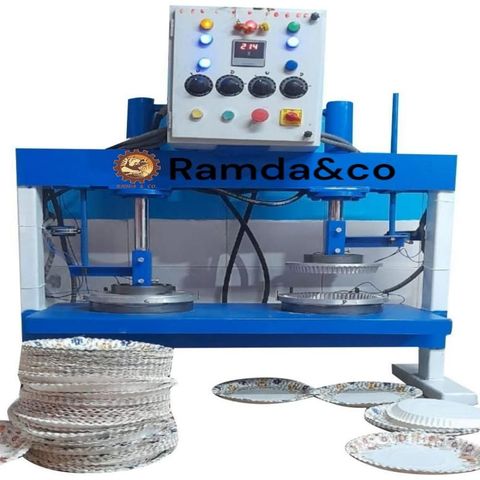
Paper plate machines are equipment used to form paper or paperboard into plates and similar food-serving products. Depending on the machine design, the process can involve feeding paper blanks or rolls, positioning the material, pressing it into a shaped die, forming the rim, and removing the finished product.
These machines exist because paper plates require consistent shapes, dimensions, edges, and forming pressure. Manual production can be slower and less consistent, while mechanical equipment can provide a more repeatable forming process.
Paper plate machines are used in different production environments, from smaller workshops to larger manufacturing facilities. Their configuration depends on the type of paper material, plate dimensions, production volume, forming method, and degree of automation.
What Is a Paper Plate Machine?
A paper plate making machine is a mechanical system designed to shape paper-based material into disposable plates or related products. Some machines are designed specifically for plates, while others can produce bowls, dishes, trays, or similar items after changing the forming die and other components.
The basic manufacturing process generally includes:
- Preparing suitable paper or paperboard
- Cutting or supplying paper blanks
- Positioning the material
- Applying forming pressure
- Shaping the plate or bowl
- Forming the rim
- Removing the finished product
- Inspecting the finished item
- Packing and storing the output under suitable conditions
The exact sequence varies according to machine design.
Types of Paper Plate Machines
Paper plate machines can be categorized by their operating method and degree of automation.
Manual or basic forming machines require more operator involvement for material placement and machine operation. They may be suitable for simpler production arrangements.
Semi automatic paper plate machines automate some forming operations while requiring operators to perform certain material-handling tasks.
Automatic paper plate machines can automate several stages, including feeding, forming, and product removal, depending on the configuration.
Hydraulic paper plate machines use hydraulic pressure to provide the force required for forming. Hydraulic systems can be designed for different plate sizes and material thicknesses.
Fully automatic paper plate machines integrate multiple operations into a more continuous production process. Their exact capabilities vary by manufacturer and machine configuration.
Some equipment is also described as a paper plate pressing machine, paper plate forming machine, or paper plate production machine, depending on its primary function.
Major Components of a Paper Plate Machine
The components of a paper plate machine work together to control material movement, forming pressure, product dimensions, and operating safety.
| Component | Main function |
|---|---|
| Feeding mechanism | Moves paper or blanks into the forming area |
| Die | Determines the basic plate or bowl shape |
| Punch/forming tool | Presses material into the required form |
| Hydraulic or mechanical system | Generates forming force |
| Heating system | Used in some designs to assist forming or coating processes |
| Control panel | Controls operating parameters |
| Frame | Supports the machine assembly |
| Sensors | Monitor position or machine conditions |
| Ejection mechanism | Removes the formed product |
| Safety system | Helps protect operators during operation |
The die is particularly important because its dimensions and geometry influence the final shape of the product. Different product sizes may require different tooling.
Paper Plate Manufacturing Process
The paper plate manufacturing process starts with selecting paper or paperboard suitable for the intended application. If the product will directly contact food, the material must meet applicable food-contact requirements.
The paper may then be cut into blanks of an appropriate diameter. These blanks are placed into the forming area or fed automatically, depending on the machine.
The forming tool applies controlled pressure to shape the material. The die determines the plate's depth, rim shape, diameter, and other characteristics.
After forming, the product is removed from the machine. Quality checks may examine dimensions, surface condition, edge formation, cleanliness, and structural consistency.
A simplified process can be represented as:
Paper material → Blank preparation → Feeding → Die forming → Rim formation → Ejection → Inspection → Packaging
The actual process may include additional steps for printing, coating, cutting, stacking, or other product-specific operations.
Factors That Affect Machine Selection
A paper plate production setup needs to be matched with the material and intended output. Machine specifications should not be considered independently of the product design.
Important technical factors include:
- Plate diameter and depth
- Paper or paperboard thickness
- Material feeding method
- Forming pressure
- Number and type of dies
- Automation level
- Electrical requirements
- Production cycle characteristics
- Machine dimensions
- Operator safety features
- Maintenance requirements
- Availability of compatible tooling
A machine designed for one plate size may not automatically produce another size. Tooling and forming specifications generally need to be compatible with the intended product.
Applications of Paper Plate Machines
Paper plate and related forming equipment can be used for several paper-based food-serving products.
Common applications include:
- Disposable paper plates
- Paper bowls
- Paper dishes
- Food-serving trays
- Small snack plates
- Catering tableware
- Event-serving products
- Certain molded paper products
The same basic forming principle can sometimes be adapted to different products by changing dies and other machine components.
However, paper plate machines should not be confused with areca plate making machines. Areca products are generally made from fallen areca palm leaves rather than conventional paper or paperboard, so their raw-material preparation and forming processes can differ significantly.
Recent Developments and Industry Trends
The paper-based packaging and food-serving sector continues to receive attention because of growing interest in alternatives to certain plastic products.
India's Plastic Waste Management Rules prohibit the manufacture, import, stocking, distribution, sale, and use of specified single-use plastic commodities, including plastic plates, cups, glasses, cutlery, trays, and related items, from 1 July 2022. The rules therefore provide an important regulatory background for manufacturers and users of alternative materials such as paper, although paper products remain subject to their own material and food-contact requirements.
Recent developments have also focused on food-contact packaging standards. FSSAI's official records show amendments to the Food Safety and Standards (Packaging) Regulations, 2018, including amendments dated 28 March 2025 and 7 August 2026.
This means manufacturers using paper plates for direct food contact need to pay attention not only to the machine but also to the material specifications and applicable food-safety requirements.
Laws and Policies in India
Paper plate manufacturing can be affected by several regulatory areas, particularly when the finished products are intended for direct food contact.
FSSAI's Food Safety and Standards (Packaging) Regulations, 2018 state that paper and paperboard intended to come into contact with food must meet specified requirements. The regulations specify that paper used for items such as plates, cups, and lids intended for direct food contact should be food grade and free from contaminants.
The 2025 FSSAI compendium further defines food-grade material and primary food packaging and establishes requirements concerning materials that directly contact food.
This is important because the machine itself does not determine whether the finished plate is suitable for food contact. The paper, coatings, inks, adhesives, and other materials used in the product may also need to satisfy applicable requirements.
BIS provides a Know Your Standard platform that allows users to search Indian Standards by IS number or keyword and review information such as standards, amendments, testing schemes, and laboratories.
Paper and paperboard standards can also be relevant to material selection. For example, BIS lists IS 6615:2021 for general-purpose packing/wrapping paper, while other standards address paper-based packaging materials and testing methods.
Environmental rules may also apply to manufacturing operations depending on the machinery, fuel use, emissions, waste generation, location, and applicable state pollution-control requirements.
Tools and Resources for Paper Plate Manufacturing
Several resources can help with technical planning and compliance research.
BIS Know Your Standard: This database can be used to search relevant Indian Standards by product or keyword and examine current standard information.
FSSAI Packaging Regulations: These regulations are important when paper plates are intended for direct contact with food. They provide requirements concerning food-grade paper and paperboard and other packaging materials.
Material specification sheets: Technical documents can record paper grammage, thickness, coating information, food-contact suitability, and other material characteristics.
Machine maintenance logs: A maintenance checklist can track lubrication, hydraulic-system inspection, electrical checks, die condition, sensors, and safety systems.
Production-quality records: Manufacturers can record plate dimensions, weight, rim formation, surface condition, and other quality parameters.
Process flow diagrams: A simple diagram showing material preparation, forming, inspection, and packaging can help document the manufacturing process.
Frequently Asked Questions
What is a paper plate machine?
A paper plate machine is equipment designed to form paper or paperboard into plates and related products using forming dies and controlled mechanical or hydraulic pressure.
What is the difference between automatic and semi automatic paper plate machines?
Automatic machines can automate more stages of material feeding, forming, and product removal, while semi automatic machines generally require greater operator involvement in some stages.
What does a paper plate die do?
A die is a forming tool that determines important characteristics of the finished product, including its shape, dimensions, depth, and rim profile.
What materials are used for paper plates?
Paper plates may use paper or paperboard selected according to the intended application. When a plate directly contacts food, applicable FSSAI requirements for food-contact paper and board must be considered.
Are paper plates covered by food-safety regulations in India?
When paper plates are intended to come into direct contact with food, applicable FSSAI packaging requirements are relevant. The regulations specify requirements for food-grade paper and paperboard and related food-contact materials.
Conclusion
Paper plate machines provide a mechanical method for forming paper or paperboard into plates, bowls, dishes, and related products. Their operation can range from relatively simple forming systems to automated production lines incorporating feeding, pressing, ejection, and monitoring functions.
Understanding the machine components, die design, forming process, material characteristics, and quality-control requirements is important when evaluating paper plate production equipment. The machine is only one part of the overall manufacturing process; raw materials and finished products also need to meet applicable requirements.
In India, food-contact paper plates are particularly affected by FSSAI packaging regulations, while plastic waste rules provide a broader policy context for alternatives to specified single-use plastic products.
For accurate technical and regulatory decisions, manufacturers should consult current BIS standards, FSSAI requirements, environmental regulations, and applicable state or local authorities. This approach helps keep paper plate manufacturing processes aligned with product specifications, food-safety expectations, and current regulatory requirements.

Related Post...
Understanding Paper Plate Machines: Essential Facts, Components, and Applications
Updated: November 19, 2026
Read More
Understanding Button Hole Machines: Essential Facts, Features, and Applications
Updated: November 12, 2026
Read More
Learn About Biscuit Making Machine: Tips, Knowledge, and Helpful Resource
Updated: November 18, 2026
Read More