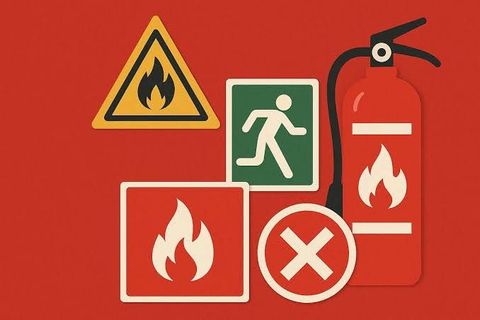
Explore Fire Safety Regulations: An Informative Guide to Laws, Requirements, and Compliance
Fire safety regulations are rules and technical requirements intended to reduce the risk of fire, limit the spread of flames and smoke, and protect people and property during emergencies. They apply across different types of buildings and activities, although the exact requirements can vary by state, building category, occupancy, height, and local authority.
In India, the National Building Code of India 2016 (NBC 2016) provides a major national framework for building-related fire and life safety. Its Part 4 addresses fire prevention, life safety, and fire protection. The code is a model code, while states and local authorities incorporate applicable provisions into their own building regulations and bye-laws.
Understanding Fire Safety Regulations
Fire safety regulations cover more than fire extinguishers. They can include building design, electrical installations, emergency exits, fire alarms, smoke control, firefighting systems, evacuation arrangements, inspections, maintenance, and emergency preparedness.
The main objective is to provide occupants with sufficient protection and time to escape safely. NBC 2016 Part 4 addresses matters such as occupancy classification, fire zones, means of egress, compartmentation, smoke control, fire-fighting installations, escape lighting, exit signage, and maintenance of fire protection systems.
Common areas covered by fire safety codes include:
- Fire prevention and risk reduction
- Building fire safety requirements
- Emergency exit and evacuation arrangements
- Fire alarm and detection systems
- Fire extinguishers and firefighting equipment
- Fire-resistant construction and compartmentation
- Smoke control and ventilation
- Emergency lighting and exit signage
- Fire drills and emergency procedures
- Inspection, testing, and maintenance
- Fire safety certificates or approvals where applicable
Why Fire Safety Compliance Matters
Fire safety compliance is important because fires can develop rapidly and create multiple hazards, including heat, smoke, toxic gases, structural damage, and blocked escape routes.
The people most directly affected include building occupants, employees, visitors, residents, patients, students, customers, and emergency responders. Higher-risk environments may require additional measures because of occupancy levels, vulnerable occupants, hazardous materials, or building design.
Effective fire safety management can help address several practical problems:
- Difficulty evacuating occupants quickly
- Insufficient emergency exits
- Inadequate fire detection
- Poorly maintained firefighting equipment
- Electrical and ignition hazards
- Uncontrolled storage of combustible materials
- Lack of emergency training
- Delayed communication during an incident
Fire safety should therefore be treated as an ongoing management responsibility rather than a one-time installation or inspection activity.
Main Fire Protection Requirements
The specific requirements depend on the building and applicable local regulations. However, fire protection systems commonly include detection, alarm, suppression, evacuation, and firefighting components.
| Fire safety area | Typical purpose |
|---|---|
| Fire detection | Identifies smoke, heat, or fire conditions |
| Fire alarm | Alerts occupants to an emergency |
| Fire extinguishers | Provides first-response firefighting capability |
| Sprinkler systems | Controls or suppresses certain fires |
| Hydrant systems | Provides water for firefighting |
| Emergency lighting | Supports evacuation during power failure |
| Exit signage | Helps occupants identify escape routes |
| Smoke control | Limits smoke movement where required |
| Fire doors | Helps restrict fire and smoke spread |
| Emergency plans | Establishes procedures for evacuation and response |
NBC 2016 also contains occupancy-specific provisions and additional requirements for areas such as high-rise buildings, commercial kitchens, car parking facilities, metro systems, and certain industrial environments.
Fire Risk Assessment and Emergency Planning
A fire risk assessment involves identifying possible ignition sources, combustible materials, people who may be particularly vulnerable, existing protection measures, and potential escape problems.
A practical assessment may examine:
- Electrical equipment and wiring
- Cooking or heating equipment
- Flammable or combustible materials
- Storage arrangements
- Emergency exits
- Fire alarm coverage
- Fire extinguishers and other equipment
- Occupant numbers
- Emergency access for firefighters
- Evacuation procedures
- Inspection and maintenance records
An emergency plan should explain what occupants are expected to do when an alarm is activated. It may include evacuation routes, assembly areas, emergency contacts, responsibilities of designated personnel, and procedures for assisting people who require additional support.
Recent Fire Safety Developments in India
Fire safety requirements continue to evolve as authorities address changing building types, urban development, healthcare risks, and emergency-response capacity.
A significant development in May 2026 was the launch by the Ministry of Health and Family Welfare of the National Guidelines on Fire and Life Safety in Healthcare Facilities (2026). The guidelines address fire prevention, detection and suppression systems, building safety, evacuation procedures, periodic audits, inspections, reporting, and training. They were introduced alongside a nationwide Fire Safety Week held from 4–10 May 2026.
The healthcare focus is important because hospitals contain patients who may have limited mobility and require assistance during evacuation. The 2026 guidelines specifically emphasize high-risk areas such as ICUs, NICUs, PICUs, and operating theatres.
Fire-service modernization has also remained a government priority. A 2026 Ministry of Home Affairs response noted a central outlay of ₹5,000 crore under the preparedness and capacity-building funding window for strengthening fire services in states, including fire stations, training, equipment, technology, and urban fire-service infrastructure.
At the state level, regulatory changes have continued as well. Maharashtra's official fire-service portal lists amended Fire Prevention and Life Safety Measures Rules, 2025, published in June 2025.
Fire Safety Laws and Policies in India
India does not operate under one single fire-safety law covering every building in exactly the same way. Fire safety enforcement is substantially connected to state legislation, local building bye-laws, development regulations, and requirements imposed by competent authorities.
The National Building Code of India 2016 provides the national model framework. The Directorate General Fire Services, Civil Defence & Home Guards states that the NBC recommendations were issued to states for incorporation into local building bye-laws.
State and local requirements can determine matters such as:
- Whether a Fire NOC or approval is required
- Building categories requiring fire safety certification
- Inspection procedures
- Fire protection system requirements
- Emergency exit provisions
- Maintenance and testing obligations
- Penalties for non-compliance
- Renewal or validity requirements
For example, Delhi Fire Service explains that its fire safety recommendations remain valid until there is an addition, alteration, or revision to the approved plan, while its FAQ states that Fire Safety Certificates have specified validity periods depending on building type.
In August 2026, Delhi enacted the Delhi Fire Service (Amendment) Act, 2026, further amending the Delhi Fire Service Act, 2007. The amendment includes changes concerning references to building bye-laws and the National Building Code.
This illustrates why organizations should check the rules applicable to their specific state, city, building type, and occupancy rather than relying solely on a general national checklist.
Tools and Resources for Fire Safety
Several official resources can help with fire safety planning and compliance research.
National Building Code resources: BIS provides information about NBC 2016 and its fire and life safety provisions. It is useful for understanding the national model framework.
State fire-service departments: State fire authorities publish applicable Acts, Rules, circulars, application procedures, and technical requirements.
Local building authorities: Municipal corporations and development authorities can provide applicable building bye-laws, approvals, and occupancy-related requirements.
Fire risk assessment checklists: Organizations can maintain checklists covering ignition sources, exits, alarms, firefighting equipment, electrical systems, storage, and emergency procedures.
Inspection and maintenance records: Digital or spreadsheet-based logs can track inspection dates, equipment testing, corrective actions, and renewal dates.
Emergency evacuation plans: Floor plans can identify emergency exits, fire equipment, assembly points, emergency contacts, and designated responsibilities.
For healthcare facilities, the 2026 National Guidelines provide an additional government resource covering fire and life safety practices in healthcare environments.
Frequently Asked Questions
What are fire safety regulations?
Fire safety regulations are legal and technical requirements designed to prevent fires, reduce fire-related risks, protect occupants, and support safe evacuation and emergency response.
What is the main fire safety code used in India?
The National Building Code of India 2016 is a major national model framework. Part 4 specifically covers Fire and Life Safety. States and local authorities incorporate applicable provisions into their own regulations and building bye-laws.
Is a Fire Safety Certificate required for every building?
Not necessarily. Requirements depend on the building's location, occupancy, size, height, use, and applicable state or local regulations. The relevant fire authority should be consulted for the specific premises.
What does a fire safety inspection check?
An inspection can examine emergency exits, fire alarms, extinguishers, firefighting systems, electrical safety, evacuation arrangements, access for emergency responders, and other requirements applicable to the building.
Why are fire drills important?
Fire drills allow occupants and responsible personnel to practice evacuation procedures, identify weaknesses in emergency arrangements, and improve familiarity with exit routes and assembly procedures.
Conclusion
Fire safety regulations provide a framework for preventing fires, protecting occupants, and supporting effective emergency response. In India, NBC 2016 Part 4 provides an important model framework, while state legislation and local building regulations determine many practical compliance requirements.
Recent developments, including the 2026 national healthcare fire-safety guidelines and continuing state-level regulatory changes, demonstrate the importance of keeping fire safety procedures and documentation up to date.
For organizations and building occupants, effective fire safety management involves more than installing equipment. It includes appropriate building design, functioning detection and protection systems, clear emergency exits, regular inspections, staff awareness, evacuation planning, and compliance with the rules applicable to the particular location and building type.

Related Post...
Explore Fire Safety Regulations: An Informative Guide to Laws, Requirements, and Compliance
Updated: November 18, 2026
Read More
Learn About Smart City Infrastructure Tools: Tips, Knowledge, and Helpful Resources
Updated: November 17, 2026
Read More
Explore Button Hole Machines: Essential Facts, Features, and Application
Updated: November 12, 2026
Read More