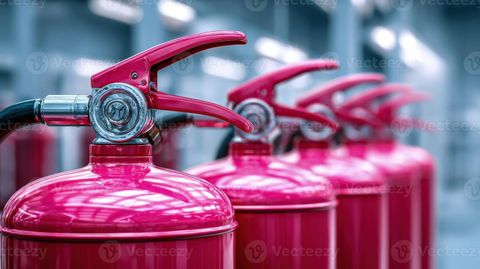
Explore Kitchen Fire Suppression Systems: An Informative Guide to Protection, Components, and Uses
Kitchen fire suppression systems are specialized fire protection arrangements designed to control or suppress fires associated with cooking equipment, cooking oils, grease, exhaust hoods, and ventilation ducts. They are particularly relevant in commercial kitchens where high-temperature cooking equipment operates for extended periods.
Unlike ordinary fire protection equipment intended for general building areas, kitchen fire suppression systems are designed around the specific hazards created by cooking appliances. A properly designed system can detect a fire and release an appropriate extinguishing agent over designated cooking equipment and within areas of the exhaust system.
In India, the National Building Code of India 2016 provides fire and life safety guidance, including specific provisions for commercial kitchen protection. BIS has also published IS 18271:2023, Fire Safety in Commercial Kitchen – Guidelines, providing dedicated guidance for commercial kitchen fire safety.
What Are Kitchen Fire Suppression Systems?
A kitchen fire suppression system is an engineered arrangement of detection, activation, agent discharge, and related controls intended to respond to cooking-related fires.
Commercial kitchens can contain several potential ignition sources, including gas burners, deep-fat fryers, griddles, ovens, ranges, and other high-temperature appliances. Grease deposits can also accumulate in exhaust hoods and ducts, creating an additional fire hazard.
A typical automatic kitchen fire suppression system may include:
- Heat-sensitive detection devices
- A suppression agent container
- Discharge piping
- Fire suppression nozzles
- Manual activation equipment
- Control or releasing mechanisms
- Gas or electrical shut-off interfaces
- Alarm connections
- Kitchen hood and duct protection
- Appropriate portable fire extinguishers
Wet chemical fire suppression systems are commonly associated with commercial cooking applications because their extinguishing agents are designed for cooking-oil and grease-related fire hazards.
Why Kitchen Fire Protection Matters
Cooking areas can present concentrated fire risks because several ignition sources and combustible materials may exist within a relatively small space.
A cooking fire can spread beyond an appliance into grease deposits inside a range hood or exhaust duct. This is one reason kitchen fire protection systems need to consider both the cooking equipment and connected exhaust areas.
The National Building Code material on commercial kitchens describes independent hood suppression arrangements using wet chemicals and provides for protection of areas potentially coated with grease. It also addresses detection, manual activation, fuel and power isolation, alarm integration, and suitable extinguishers.
Kitchen fire suppression can help address several safety challenges:
- Rapidly developing cooking fires
- Hot cooking-oil and grease hazards
- Fire spreading into exhaust systems
- Delayed detection of appliance fires
- Continued fuel or electrical supply during an emergency
- Difficult access to fires around cooking equipment
- Smoke and heat accumulation
- Insufficient emergency response arrangements
The system should be considered part of a wider restaurant kitchen fire safety program rather than a replacement for other fire protection measures.
Main Types of Kitchen Fire Suppression
Different kitchen environments require different protection approaches. System selection depends on the cooking equipment, fuel, layout, ventilation arrangement, and applicable fire-safety requirements.
| System or protection type | Typical application |
|---|---|
| Wet chemical suppression | Cooking oils, grease, fryers, ranges and commercial cooking equipment |
| Hood fire suppression | Cooking hood and appliance protection |
| Exhaust duct protection | Areas where grease and combustion products can accumulate |
| Automatic suppression | Systems designed to activate when specified conditions are detected |
| Manual activation | Human-operated emergency activation |
| Portable extinguishers | Additional first-response protection |
| Fire alarm integration | Notification and emergency response |
Wet chemical systems are particularly important for commercial cooking applications. However, the exact extinguishing agent and system configuration should be selected according to the hazard and applicable standards rather than assuming that one system is appropriate for every kitchen.
Important System Components
Kitchen fire suppression system components work together to detect a fire, activate the system, discharge the agent, and control related hazards.
Detection devices: Heat detectors or other approved detection mechanisms identify conditions associated with a developing fire.
Suppression agent: The agent is stored in a dedicated container and released through the system's piping and nozzles.
Fire suppression nozzles: Nozzles direct the extinguishing agent toward protected cooking appliances, hood areas, or other designated locations.
Manual activation device: A manually operated mechanism allows occupants to activate the suppression system during an emergency.
Fuel and power isolation: Where required, system activation can be connected to controls that shut off gas or electrical supplies serving cooking equipment.
Alarm interface: Activation can be connected to an alarm system to notify occupants that the suppression system has operated.
Exhaust protection: Hood and duct areas may require dedicated protection because grease accumulation can create a continuing fire hazard.
The NBC guidance specifically describes automatic isolation of power or gas supplies after detection and activation, while also requiring manual activation devices in accessible locations.
How Automatic Kitchen Fire Suppression Works
An automatic kitchen fire suppression system generally follows a sequence of detection, activation, agent discharge, and hazard control.
A simplified sequence is:
Heat or fire detected → Suppression system activated → Extinguishing agent discharged → Fuel/power isolation where required → Alarm activated → Emergency response begins
The exact sequence depends on the system design and applicable requirements.
For example, NBC provisions describe heat detection above appliances and within hood areas, along with manual activation. They also address automatic isolation of gas or power supplies and alarm integration.
The system should not be viewed as an independent solution to every kitchen fire risk. Proper cooking practices, equipment maintenance, ventilation management, portable extinguishers, emergency procedures, and staff awareness remain important.
Recent Developments and Standards
Commercial kitchen fire safety has received increased attention through dedicated standards and regulatory guidance.
In July 2024, the Bureau of Indian Standards organized a stakeholder program in Chennai focused specifically on IS 18271:2023, Fire Safety in Commercial Kitchen – Guidelines. BIS highlighted the importance of protection measures for commercial kitchens and noted that NBC 2016 Part 4 includes specific provisions for this environment.
Another important development is the continued review and updating of Indian Standards. BIS records show that IS 15519:2020, covering water-mist fire protection system design, installation, and commissioning, was reviewed in 2025 and reaffirmed in June 2025. The standard is also listed as a reference in IS 18271:2023.
Equipment standards have also continued to develop. BIS lists IS 8251:2024, covering commercial cooking ranges and grillers for LPG, with the standard included in BIS laboratory scope from February 2026.
These developments show a broader movement toward more specific technical guidance for cooking equipment, fire protection systems, and commercial kitchen safety.
Laws, Regulations, and Policies in India
Kitchen fire suppression requirements in India can be affected by national standards, state fire laws, local building regulations, and the requirements of the relevant fire authority.
The National Building Code of India 2016 is the central model framework. The Directorate General Fire Services, Civil Defence & Home Guards explains that NBC recommendations were issued to states for incorporation into local building bye-laws.
For commercial kitchens, BIS's standardized building regulations state that commercial kitchens serving centrally air-conditioned buildings such as hotels, banquets, food courts, malls, and restaurants should comply with the fire-safety provisions of NBC 2016 Part 4.
State-specific requirements can differ. For example, Maharashtra maintains its own Fire Prevention and Life Safety Measures Act and Rules, including amended rules published in June 2025.
Delhi Fire Service also issued a specific circular in May 2026 concerning fire-safety compliance for restaurants and eating houses in existing buildings. The circular explains circumstances under which an existing restaurant may rely on the building's valid Fire Safety Certificate and circumstances involving changes in occupancy or layout that may require further consideration.
Therefore, the applicable requirements should always be checked against the building's location, occupancy classification, layout, height, cooking equipment, fuel type, and current local regulations.
Tools and Resources for Kitchen Fire Safety
Several resources can support research, planning, and documentation.
BIS standards: BIS provides access to information about Indian Standards, including commercial kitchen fire safety guidance and related fire-protection standards.
National Building Code resources: NBC 2016 Part 4 provides a broad framework covering fire and life safety provisions.
State fire-service websites: State fire departments publish applicable Acts, Rules, technical requirements, circulars, and approval information.
Fire risk assessment checklists: A checklist can document cooking appliances, fuel sources, exhaust systems, grease accumulation, detection equipment, extinguishers, emergency exits, and staff procedures.
Inspection records: Digital records or spreadsheets can track system inspection dates, detector checks, agent-cylinder information, nozzle conditions, alarm interfaces, and corrective actions.
Emergency response plans: Written procedures can identify manual activation points, emergency exits, assembly areas, fuel shut-off locations, and emergency contacts.
For commercial kitchens, documentation should be maintained alongside other building fire-safety records rather than treated as a separate activity.
Frequently Asked Questions
What is a kitchen fire suppression system?
It is a specialized fire protection system designed to detect and suppress cooking-related fires, particularly around commercial cooking appliances, hoods, and exhaust areas.
Why are wet chemical systems used in commercial kitchens?
Wet chemical systems are designed for specific cooking hazards, including high-temperature cooking oils and grease. The agent and system must be appropriate for the particular hazard and installed according to applicable requirements.
Does a kitchen suppression system replace a fire extinguisher?
No. A suppression system is one component of a broader fire protection arrangement. Suitable portable extinguishers, alarms, evacuation arrangements, and other required protection measures may still be necessary.
What does a kitchen hood suppression system protect?
Depending on its design, it can protect cooking appliances, the hood interior, and areas of the connected exhaust system where grease accumulation may create a fire hazard.
Are commercial kitchen suppression systems regulated in India?
They can be subject to national standards, NBC provisions, state fire-safety legislation, local building regulations, and requirements established by the relevant authority. The exact requirements depend on the building and its location.
Conclusion
Kitchen fire suppression systems are an important part of commercial kitchen fire protection because cooking areas can contain concentrated heat, ignition sources, combustible oils, grease deposits, and exhaust systems.
Wet chemical suppression systems, hood protection, automatic detection, manual activation, suitable extinguishers, fuel isolation, and alarm integration can work together as part of a broader kitchen fire safety strategy. NBC 2016 and IS 18271:2023 provide important technical references for commercial kitchen fire safety in India.
Recent developments in Indian standards and local fire-safety rules also demonstrate the importance of keeping protection arrangements aligned with current requirements. For any commercial kitchen, the appropriate system should be determined according to the cooking equipment, fuel, ventilation design, building classification, and applicable authority requirements rather than relying on a generic configuration.

Related Post...

Understanding Enterprise Software Solutions: Essential Facts, Functions, and Details
Updated: November 16, 2026
Read More
Learn About Acne Scar Treatment: Tips, Treatment Options, and Helpful Resources
Updated: November 18, 2026
Read More
Explore Fire Safety Regulations: An Informative Guide to Laws, Requirements, and Compliance
Updated: November 18, 2026
Read More