Explore Laser Cutting Machines for Metal: An Informative Guide to Technology and Applications
Metal laser cutting machines use a concentrated laser beam to cut, shape, or process metal materials according to programmed designs. They are widely used in manufacturing, sheet-metal fabrication, automotive production, engineering, electronics, appliances, and other industrial applications.
Modern systems commonly combine a laser source with computer numerical control (CNC), motion systems, optics, assist gases, and automated material handling. The technology allows manufacturers to produce complex profiles and repeatable components from materials such as mild steel, stainless steel, aluminum, brass, and copper.
Understanding Metal Laser Cutting Technology
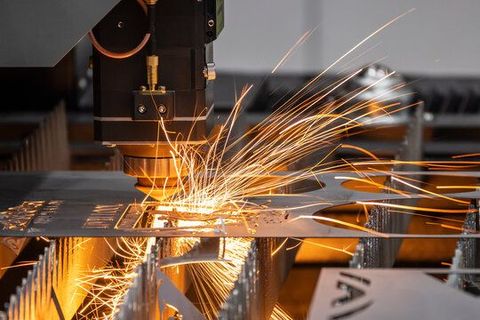
Laser cutting works by directing a highly concentrated beam of light onto a specific point on a metal surface. The energy generated at the focal point heats the material, causing it to melt or, depending on the process and material, vaporize. An assist gas helps remove molten material from the cutting area.
A CNC controller follows a digital design and moves the cutting head along a programmed path. This allows the same geometry to be reproduced across multiple components with consistent machine-controlled movement.
The basic process involves:
- Preparing a digital component design
- Selecting suitable cutting parameters
- Positioning the metal sheet or component
- Focusing the laser beam
- Moving the cutting head along the programmed path
- Using an appropriate assist gas
- Removing the finished component
- Inspecting dimensions and cut quality
Laser cutting is different from mechanical cutting because the cutting tool does not need to physically contact the material. This can reduce mechanical tool wear associated with conventional cutting methods, although laser systems have their own optical, electrical, mechanical, and maintenance requirements.
Types of Laser Cutting Machines for Metal
Different laser technologies are used according to material, thickness, production requirements, and machine configuration.
Fiber laser cutting machines use a solid-state laser source delivered through optical fiber. They are widely used for sheet-metal and industrial metal applications because of their efficiency and ability to process many commonly used metals.
CO₂ laser cutting machines use a gas laser source. They have historically been important in industrial cutting applications and can process a range of materials, although fiber technology has become increasingly prominent for metal processing.
CNC fiber laser cutting machines combine fiber laser technology with computer-controlled movement. CNC control allows digital designs to be translated into precise cutting paths.
High-power fiber laser cutters use higher laser output for applications involving thicker materials or higher cutting productivity. However, higher power alone does not determine cutting performance; material type, thickness, beam characteristics, optics, gas, and process parameters also matter.
| Machine type | Typical characteristic | Common applications |
|---|---|---|
| Fiber laser | Efficient metal processing | Sheet metal, fabrication |
| CO₂ laser | Gas-based laser source | Industrial cutting and processing |
| CNC laser | Computer-controlled movement | Repeated component production |
| High-power fiber laser | Higher available laser output | Thicker metal applications |
| Automated laser system | Integrated material handling | Higher-volume production |
Metals Commonly Processed
Metal laser cutting equipment can process several industrial metals when the machine and process parameters are appropriate.
Mild steel: Commonly used for structural components, brackets, panels, frames, and fabricated parts.
Stainless steel: Used in equipment, architectural components, food-processing applications, appliances, and fabricated assemblies.
Aluminum: Its relatively low density makes it useful in transportation, electronics, machinery, and structural applications. Cutting parameters need to account for aluminum's reflective and thermal characteristics.
Brass: Used in decorative components, electrical parts, fittings, and precision components.
Copper: Used extensively in electrical and thermal applications. Its high reflectivity and thermal conductivity require appropriate laser equipment and process control.
The maximum practical thickness depends on the machine configuration, laser source, material grade, cutting speed, assist gas, optics, and desired edge quality.
Why Metal Laser Cutting Is Important
Laser cutting technology supports modern manufacturing because it can produce complex two-dimensional profiles directly from digital designs.
For manufacturers and fabricators, the technology can help with:
- Repeatable component production
- Complex geometric profiles
- Digital design-to-production workflows
- Reduced mechanical contact during cutting
- Efficient sheet utilization through nesting
- Rapid design changes
- Automated CNC production
- Integration with other manufacturing processes
It is particularly useful when components require accurate profiles or when designs change frequently.
The technology is also part of a broader movement toward automated and digitally controlled manufacturing. India's manufacturing sector has continued to expand its use of automation and digital technologies. In 2026, manufacturing remained a major component of the Indian economy, with increased emphasis on technology-intensive production and domestic manufacturing capabilities.
Applications of Metal Laser Cutting Machines
Metal laser cutters are used across numerous industries.
Automotive manufacturing: Laser systems can process brackets, body components, structural parts, exhaust components, and other metal profiles.
Sheet-metal fabrication: Fabricators use laser cutting for panels, enclosures, brackets, frames, and custom components.
Industrial machinery: Precision metal cutting can produce machine guards, structural parts, mounting plates, and components.
Electrical and electronics: Thin metal sheets can be processed into enclosures, panels, brackets, and other components.
Architecture and construction: Laser cutting can create metal panels, decorative screens, structural components, and custom architectural elements.
Appliance manufacturing: Metal cutting is used for internal and external components in various household and commercial appliances.
Engineering production: CNC laser systems can support repeatable production of components requiring defined dimensions and profiles.
Factors That Influence Cutting Performance
A metal laser cutting system does not operate effectively based on laser power alone. Several variables influence the final result.
Important factors include:
- Material type and grade
- Material thickness
- Laser wavelength and source technology
- Laser output
- Beam quality
- Focal position
- Cutting speed
- Assist-gas type and pressure
- Nozzle condition
- Lens and optical cleanliness
- CNC motion accuracy
- Thermal characteristics of the material
For example, oxygen, nitrogen, and compressed air can behave differently during metal cutting. The appropriate gas depends on the material, thickness, desired edge characteristics, and process requirements.
Nesting is another important consideration. Software can arrange multiple component profiles within a sheet to improve material utilization and reduce unnecessary unused areas.
Recent Developments and Trends
Metal cutting is increasingly connected with automated and digitally integrated manufacturing systems. CNC controls, automated material handling, production monitoring, nesting software, and machine data are becoming part of broader manufacturing workflows.
In India, the wider manufacturing environment has continued to move toward automation and higher-technology production. According to an August 2026 industry overview, medium- and high-technology industries accounted for 46.3% of India's manufacturing value added, highlighting the growing role of sophisticated production technologies.
Another development is greater attention to machine safety and conformity assessment. India's Bureau of Indian Standards has continued work around machinery safety standards. A 2025 BIS document references ISO 11553, which covers safety of machinery and laser processing machines, alongside Indian standards addressing risk assessment and protective equipment.
Automation is also becoming more integrated with manufacturing planning. Laser systems can be connected with CAD/CAM software, production-management systems, robotic handling, and automated storage systems, allowing cutting to become part of a more connected production workflow.
Laws, Safety Standards, and Policies in India
Metal laser cutting machines involve high-energy laser radiation, electrical systems, moving mechanical components, compressed gases, fumes, heat, and potentially hazardous materials. Workplace safety is therefore an important consideration.
India's Occupational Safety, Health and Working Conditions Code, 2020 establishes duties relating to workplace safety and health. The Ministry of Labour and Employment's 2026 materials state that employers must maintain workplaces free from hazards likely to cause injury or occupational disease and comply with applicable occupational safety and health standards.
The Ministry also published updated information and FAQs concerning the OSH&WC Code during 2026, including clarification that health and safety provisions apply to establishments employing 10 or more employees under the relevant framework.
Machinery conformity requirements can also be relevant. The Machinery and Electrical Equipment Safety (Omnibus Technical Regulation) Order, 2024 established conformity requirements for machinery and electrical equipment covered by its schedules and references risk assessment and machinery-safety standards. Whether a particular laser cutting machine is covered depends on its classification and the applicable schedule and requirements.
Laser-processing equipment should also be evaluated against applicable machinery and laser-safety standards. BIS documentation specifically references ISO 11553 for laser processing machine safety.
In practical terms, industrial workplaces should consider:
- Laser radiation protection
- Machine guarding and interlocks
- Electrical safety
- Fume and particulate extraction
- Fire prevention
- Compressed-gas safety
- Emergency-stop systems
- Operator training
- Preventive maintenance
- Risk assessment
- Appropriate personal protective equipment
Applicable state factory rules, environmental requirements, electrical regulations, and fire-safety provisions may also apply depending on the facility.
Tools and Resources for Metal Laser Cutting
Several digital and technical resources support laser cutting workflows.
CAD software: Used to create precise two-dimensional component drawings.
CAM and nesting software: Converts designs into machine-readable cutting paths and can arrange multiple components efficiently on a sheet.
Material databases: Help users research recommended parameters for different metal grades and thicknesses.
Machine manuals: Manufacturer documentation provides information about operating limits, maintenance, optics, consumables, and safety systems.
BIS standards: BIS publications can help organizations identify relevant Indian Standards for machinery safety and conformity.
Workplace risk-assessment templates: These can document hazards, controls, responsible personnel, inspection schedules, and corrective actions.
A useful machine-maintenance checklist can include:
- Laser source condition
- Protective window and lens inspection
- Nozzle condition
- Cooling system
- Assist-gas connections
- Extraction system
- Machine guards and interlocks
- Emergency-stop function
- CNC positioning system
- Electrical connections
- Maintenance records
Frequently Asked Questions
What is a metal laser cutting machine?
It is a machine that uses a concentrated laser beam to cut or process metal according to a programmed cutting path, commonly controlled through CNC technology.
What is a fiber laser cutting machine?
A fiber laser cutting machine uses a solid-state laser source whose beam is delivered through optical fiber. Fiber systems are widely used for industrial metal-cutting applications.
Which metals can laser cutting machines process?
Depending on machine configuration and process parameters, laser systems can process mild steel, stainless steel, aluminum, brass, copper, and other metals.
Does higher laser power always mean better cutting?
No. Cutting performance depends on several factors, including material type and thickness, beam quality, optics, assist gas, cutting parameters, and machine motion. Higher power can be useful for certain applications but is not the only performance factor.
Are metal laser cutting machines subject to safety requirements in India?
Yes. Industrial workplaces and machinery can be subject to occupational safety, machinery safety, electrical, environmental, and other applicable requirements. Specific obligations depend on the machine, workplace, and applicable regulations.
Conclusion
Laser cutting machines for metal have become important tools in digitally controlled manufacturing. Fiber laser cutting machines, CNC systems, automated material handling, and CAD/CAM software allow manufacturers to process complex metal profiles with controlled and repeatable movements.
The technology can be applied to mild steel, stainless steel, aluminum, brass, copper, and other materials, although the appropriate machine configuration and process parameters vary by application.
Recent developments in India's manufacturing sector show increasing emphasis on automation, technology-intensive production, and domestic manufacturing capabilities. At the same time, machinery and workplace safety remain essential considerations.
Understanding laser technology, material characteristics, CNC programming, cutting parameters, maintenance, and applicable safety requirements provides a practical foundation for evaluating metal laser cutting systems and their role in modern manufacturing.

Related Post...
Explore Laser Cutting Machines for Metal: An Informative Guide to Technology and Applications
Updated: November 23, 2026
Read More
Explore Coffee Roasting Machines: An Informative Guide to Functions and Applications
Updated: November 22, 2026
Read More
Understanding Laser Cutting Machines: Essential Facts, Technologies, and Insights
Updated: November 23, 2026
Read More