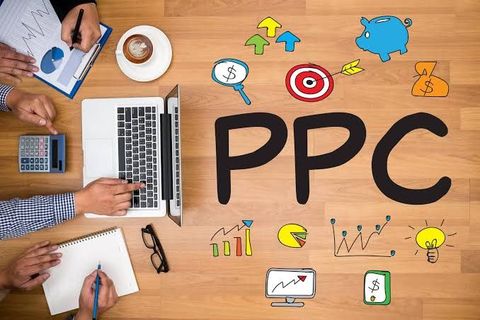
Explore PPC Strategies to Maximize ROI: A Complete Guide to Campaign Optimization
PPC, or pay-per-click, advertising is a digital advertising model in which advertisers generally pay when a user clicks an advertisement. Search advertising is one of the most recognizable forms of PPC because ads can appear when people search for terms related to a product, topic, or organization.
PPC advertising exists because search engines and other digital platforms provide a way to connect user queries with relevant advertisements. Advertisers can define audiences, keywords, locations, budgets, messages, and other campaign settings according to the advertising platform and campaign objective.
A well-structured PPC campaign begins with a clear objective. Depending on the campaign, the objective might involve website visits, leads, purchases, app activity, or another measurable action.
PPC optimization is the ongoing process of evaluating campaign performance and making evidence-based adjustments. It can involve keyword selection, ad copy, bidding, targeting, landing pages, conversion measurement, and budget allocation.
PPC management services and PPC management activities may include campaign planning, account organization, keyword research, performance analysis, testing, and reporting. A PPC management process should focus on accurate measurement rather than promising a particular financial outcome.
How PPC Campaigns Work
A search advertising campaign typically connects several components:
Search queries: What users type into a search engine.
Keywords: Terms or themes used to help determine when an advertisement may be eligible to appear.
Ad assets: Headlines, descriptions, images, and other available formats.
Targeting: Settings that determine where and to whom ads can appear.
Bidding: Signals used by the advertising system to determine how much an advertiser is willing to pay for relevant opportunities.
Landing pages: The pages users reach after interacting with an advertisement.
Conversions: Defined actions used to evaluate campaign outcomes.
The relationship can be represented simply as:
Search intent → Ad eligibility → Ad impression → Click → Landing page → Conversion measurement → Optimization
Not every impression produces a click, and not every click produces a conversion. Therefore, evaluating PPC performance requires more than looking at clicks alone.
Why PPC Optimization Matters
PPC campaigns can generate large amounts of performance data. Without structured analysis, it can be difficult to determine which keywords, audiences, advertisements, and landing pages are contributing to the desired objective.
PPC optimization helps identify areas that may require attention. For example, an advertiser may discover that a keyword receives many clicks but produces few meaningful actions. Another keyword may receive fewer clicks but generate stronger conversion signals.
Important performance indicators can include:
| Metric | What it helps measure |
|---|---|
| Impressions | How often an advertisement was shown |
| Clicks | How often users interacted with an advertisement |
| CTR | The relationship between clicks and impressions |
| CPC | Average amount paid per click |
| Conversions | Completed actions defined by the advertiser |
| Conversion rate | The proportion of measured interactions that resulted in conversions |
| CPA | Average advertising spend associated with a conversion |
| ROAS | Revenue attributed to advertising relative to advertising spend |
Metrics should always be interpreted in context. A high click-through rate does not automatically mean that a campaign is profitable, and a low cost per click does not necessarily indicate strong business performance.
Building an Effective PPC Campaign Structure
A clear campaign structure makes performance analysis easier.
Define the campaign objective
Start by deciding what the campaign is intended to achieve. Objectives should be measurable and connected to a meaningful business outcome.
Research search intent
Keyword research should consider what users are actually trying to accomplish. Informational, navigational, commercial, and transactional searches can have different meanings.
For example, a search for “what is PPC advertising” indicates a different intent from “Google Ads campaign management.”
Organize relevant keywords
Keywords can be grouped according to topic, intent, product category, geography, or another logical structure. Closely related themes can make ad messaging and performance analysis more consistent.
Negative keywords can also help prevent ads from appearing for searches that are not relevant to the campaign.
Write relevant ad copy
Advertisements should accurately describe the destination and align with the user's search intent. Clear language is generally more useful than exaggerated claims.
Ad variations can be tested to understand which messages are more relevant to the intended audience.
Improve landing pages
A landing page should provide information that is consistent with the advertisement. Users should be able to understand what the page is about and navigate it without unnecessary obstacles.
Google Ads requires destinations to be functional, accessible, relevant, and easy to navigate.
Practical PPC Optimization Techniques
Use search-term analysis
Search-term reports can reveal the actual queries associated with advertising traffic. These reports can identify useful new keyword themes as well as irrelevant searches that may need exclusion.
Test advertisements systematically
Testing can compare different messages, calls to action, value statements, and formats. Each test should have a clear hypothesis and enough data to make the comparison meaningful.
Changing multiple variables simultaneously can make it difficult to identify which change affected the result.
Review bidding performance
Automated and manual bidding approaches have different characteristics. Automated bidding can use signals from the advertising platform to optimize toward selected goals, while manual approaches can provide more direct control in certain situations.
The appropriate approach depends on campaign objectives, conversion data, account structure, and available controls.
Monitor conversion tracking
Accurate conversion tracking is fundamental to PPC optimization. If important actions are not measured correctly, automated bidding and performance analysis may be based on incomplete information.
Tracking should distinguish meaningful conversions from secondary interactions where appropriate.
Evaluate landing-page relevance
The advertisement, keyword theme, and landing page should communicate a consistent message. A user searching for a specific topic should not be sent to an unrelated or confusing page.
Use geographic and audience data carefully
Location, device, time, and audience information can reveal performance differences. However, smaller datasets may contain substantial variation, so decisions should be based on sufficient evidence rather than isolated results.
Recent PPC and Google Ads Developments
PPC advertising is changing rapidly as search behavior, automation, artificial intelligence, and measurement technologies develop.
AI Max for Search campaigns
On 15 April 2026, Google announced that AI Max for Search campaigns was moving out of beta. Google subsequently updated the transition timeline in June 2026, stating that the automatic upgrade of remaining eligible Dynamic Search Ads campaigns would begin in February 2027.
AI Max combines automated capabilities involving search-term matching, text customization, and final URL expansion. Advertisers therefore need to understand which automated features are active and how they affect campaign control and measurement.
New AI Max testing capabilities
On 20 August 2026, Google announced new testing and planning capabilities for AI Max, including experiments involving budgets and ROI targets across multiple Search campaigns. Google also described additional controls for brand and location settings.
Expanded AI and measurement tools
On 10 August 2026, Google announced additional AI and agentic capabilities across Google Ads and Google Analytics, including tools intended to help advertisers identify performance changes and explore campaign information.
These developments indicate a broader shift toward automated campaign management. Human oversight remains important because automation depends on campaign objectives, data quality, conversion definitions, and the settings supplied by the advertiser.
PPC Laws, Policies, and Advertising Rules in India
PPC campaigns targeting users in India must follow the advertising platform's policies as well as applicable Indian laws and advertising standards.
Google Ads policies
Google's advertising policies prohibit misleading claims, deceptive practices, unclear business identities, and promotions that do not accurately represent the advertised destination. Google also requires advertising destinations to be functional and relevant.
Advertisers should therefore:
Use accurate business and product information.
Avoid unrealistic performance or financial claims.
Ensure ad text matches the landing page.
Avoid misleading omissions.
Keep destination URLs functional and relevant.
Clearly communicate material information required for users to make informed decisions.
Google updated its Destination Requirements policy in June 2026 concerning certain approved redirects to different domains. The change took effect in early July 2026.
Advertising Standards Council of India
The Advertising Standards Council of India (ASCI) Code applies to advertisements directed toward consumers in India. Its digital advertising guidance emphasizes that advertising should not mislead consumers through omission, exaggeration, implication, or ambiguity.
Advertisers should also consider sector-specific requirements where applicable, particularly for regulated categories such as financial products, healthcare, education, and other sensitive areas.
PPC Tools and Resources
Several tools can support different parts of PPC campaign planning and analysis.
Google Ads: Campaign creation, keyword targeting, bidding, ad assets, and performance reporting.
Google Keyword Planner: Keyword research and search-volume-related planning within Google Ads.
Google Analytics: Website and conversion analysis that can complement advertising data.
Google Search Console: Organic search performance data that can provide additional insight into search behavior.
Google Ads Editor: Campaign management and bulk editing for supported Google Ads accounts.
Looker Studio: Dashboard and reporting capabilities for combining and presenting marketing data.
Google Ads Help Center: Official documentation for campaign settings, measurement, and advertising policies.
A basic PPC optimization worksheet can track:
| Area | Questions to review |
|---|---|
| Keywords | Are search terms relevant to the campaign objective? |
| Ads | Does the message accurately reflect the landing page? |
| Targeting | Are location, language, device, and audience settings appropriate? |
| Tracking | Are important conversions recorded correctly? |
| Landing page | Is the page relevant, functional, and easy to navigate? |
| Budget | Is spending aligned with campaign priorities? |
| Performance | Are decisions based on sufficient and reliable data? |
Frequently Asked Questions
What is PPC advertising?
PPC advertising is a digital advertising model in which advertisers generally pay when users click an advertisement. Search advertising is one common example.
What is PPC optimization?
PPC optimization is the process of analyzing campaign data and adjusting elements such as keywords, advertisements, targeting, bidding, conversion tracking, and landing pages to improve campaign performance.
What is Google Ads management?
Google Ads management involves planning, configuring, monitoring, analyzing, and adjusting campaigns within Google Ads. It can include keyword research, ad creation, bidding, conversion tracking, and reporting.
How is PPC ROI measured?
ROI can be evaluated by comparing the value generated by advertising with the advertising investment and other relevant business expenses. ROAS is a related metric that compares attributed revenue with advertising spend. The appropriate measurement depends on the campaign objective and available data.
Can PPC guarantee a particular ROI?
No. PPC performance varies according to competition, audience behavior, search demand, advertising quality, landing-page experience, market conditions, measurement accuracy, and many other factors. A responsible PPC strategy should use historical evidence and ongoing testing rather than guarantee a specific financial result.
Conclusion
PPC advertising provides a measurable way to reach users through paid search and other digital advertising formats. Effective PPC campaign management depends on clear objectives, relevant targeting, accurate measurement, useful landing pages, and continuous analysis.
PPC optimization is not simply about increasing clicks. The more important task is understanding whether advertising interactions contribute to the campaign's defined objective.
Recent developments in AI-powered advertising are increasing automation across search campaigns. These tools can help process large amounts of information, but advertisers still need to establish appropriate goals, review performance, protect user trust, and comply with advertising policies.
A balanced PPC strategy combines data analysis, relevant messaging, responsible targeting, accurate conversion measurement, and regular testing. This approach provides a practical foundation for evaluating campaign performance while avoiding misleading claims or unrealistic expectations.

Related Post...

Learn Multi-Layer Pantry Shelf Organizer: Essential Basic, Fact, and Useful Knowledge
Updated: November 04, 2026
Read More
Learn OCT Machine Basics: Facts, Details, and Practical Suggestions
Updated: November 07, 2026
Read More
Explore Electric Vehicle Batterie: A Complete Guide to Type, Technology, and Application
Updated: November 04, 2026
Read More