AI in Lighting Control Systems: Discover the Basics, Key Features, and Practical Insights
AI in lighting control systems refers to the use of artificial intelligence, sensors, software, and connected devices to adjust lighting according to changing conditions. Instead of relying entirely on manual switches or fixed schedules, these systems can analyze information such as occupancy, daylight levels, operating hours, and historical usage to help determine appropriate lighting settings.
Traditional lighting controls typically use switches, timers, motion sensors, or preset schedules. Smart lighting control systems can connect these functions through digital networks, allowing users to manage lights across individual rooms, entire buildings, or multiple facilities.
AI introduces an additional layer of analysis. Depending on the system, machine learning models can identify usage patterns, estimate lighting requirements, detect unusual energy consumption, or recommend adjustments to operating schedules.
For example, an office lighting system may use occupancy sensors to switch off lights in empty meeting rooms. A more advanced system could analyze recurring room-use patterns and adjust lighting schedules while continuing to respond to real-time occupancy and daylight conditions.
AI lighting control systems are part of the broader development of smart building technology solutions. They connect lighting infrastructure with building management platforms, energy monitoring tools, and other automated building functions.
How Intelligent Lighting Automation Works
Intelligent lighting automation combines several components to make lighting decisions based on available information.
The main components include:
Sensors: Detect occupancy, movement, ambient brightness, or other relevant environmental conditions.
Connected lighting devices: Include LED fixtures, smart bulbs, dimmers, and digitally controlled drivers.
Control software: Applies rules, schedules, and lighting preferences.
AI models: Analyze available data to identify patterns and support predictions or recommendations.
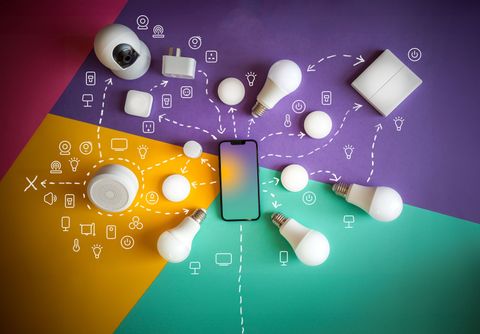
Communication networks: Connect devices using technologies such as Bluetooth, Wi-Fi, Zigbee, or wired building-control protocols.
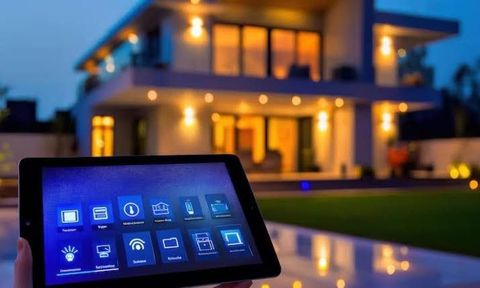
User interfaces: Allow facility managers and occupants to adjust settings, review performance, and monitor system status.
The exact architecture varies. Some smart lighting control systems use simple automated rules without artificial intelligence, while others incorporate machine learning or AI-based analytics.
A system should therefore be described as AI-powered only when it actually uses AI capabilities rather than ordinary timers or motion sensors alone.
Importance of AI-Powered Lighting Systems
AI-powered lighting can support energy management, occupant comfort, operational consistency, and maintenance planning. Its effectiveness depends on the quality of the sensors, control logic, building design, and system configuration.
Energy efficiency and lighting management
Lighting can contribute to electricity consumption in offices, factories, warehouses, educational institutions, hospitals, and retail buildings. Automated lighting management systems help reduce unnecessary illumination by responding to occupancy, daylight, and operating schedules.
For example, daylight harvesting systems adjust artificial lighting when sunlight provides sufficient illumination. Occupancy-based controls can turn off or dim lights in unused areas.
Potential benefits include:
Reducing electricity use when full lighting is unnecessary.
Improving visibility through appropriate lighting levels.
Supporting energy monitoring and reporting.
Identifying unusual operating patterns.
Helping facility managers evaluate energy performance.
Actual energy savings depend on the existing lighting system, operating hours, occupancy patterns, and control settings. AI does not guarantee a particular reduction in electricity consumption.
Comfort and productivity
Lighting conditions influence visual comfort and the ability to perform tasks safely and effectively. Intelligent lighting automation can adjust brightness according to the time of day, available daylight, and room requirements.
In offices, adjustable lighting may help occupants select suitable illumination for reading or computer work. In educational settings, lighting controls can accommodate different classroom activities.
However, lighting systems should be designed around appropriate illumination standards and occupant needs. Automated adjustments should not create glare, flicker, or insufficient visibility.
Commercial and industrial applications
Environment | Potential application |
|---|---|
Offices | Occupancy-based lighting and daylight adjustment |
Retail buildings | Scheduled lighting and zone-level brightness control |
Warehouses | Automated aisle lighting and occupancy detection |
Factories | Task-specific illumination and operating schedules |
Hospitals | Room-based controls and carefully configured lighting schedules |
Educational buildings | Classroom lighting adjustments and energy monitoring |
Outdoor facilities | Time-based controls and daylight-responsive operation |
Industrial lighting control systems may also integrate with operational schedules and facility monitoring platforms. Safety-critical environments require appropriate illumination even when occupancy is low or automated systems encounter faults.
Recent Developments and Technology Trends
AI lighting control is developing alongside connected sensors, building management software, and energy-efficient LED technology. Several trends are shaping its use in 2025 and 2026.
Connected building automation
Building operators increasingly use connected systems to monitor lighting alongside heating, ventilation, air conditioning, and other building functions. Integrating these systems can provide a broader view of energy use and building operations.
AI-assisted energy analytics
AI-based analytics can examine historical lighting data to identify unusual consumption, recurring occupancy patterns, or potential scheduling improvements. These insights can support operational decisions, although recommendations should be validated against actual building conditions.
Interoperability and connected devices
Communication standards such as DALI-2, Bluetooth, Zigbee, and BACnet support different types of connected lighting and building automation. Compatibility varies by device, implementation, and protocol version, so system designers should verify integration requirements before selecting equipment.
India's building energy-efficiency framework
India's Bureau of Energy Efficiency lists the Energy Conservation and Sustainable Building Code 2024 (ECSBC 2024) among its published resources. The code reflects the continuing development of energy-efficiency guidance for buildings. The applicability of specific provisions depends on the relevant code, government notification, and jurisdiction.
These developments indicate a broader movement toward data-informed building management. They do not mean that every modern lighting system uses AI or that AI integration is necessary for every building.
Laws, Standards, and Policies in India
AI lighting control systems can be affected by building energy codes, electrical safety requirements, and applicable technical standards. Compliance depends on the building type, location, installation, and current regulatory requirements.
Energy Conservation Building Code
The Bureau of Energy Efficiency (BEE), under India's Ministry of Power, introduced the Energy Conservation Building Code in 2007 and updated it in 2017. The code addresses energy performance in commercial buildings, including interior and exterior lighting, lighting controls, and electrical systems. Its implementation and applicability depend on the relevant state or local adoption and notification.
Energy Conservation Act, 2001
The Energy Conservation Act provides a legislative framework for energy conservation in India. It supports the development of energy-efficiency requirements and related regulatory initiatives.
National Building Code of India
The National Building Code of India provides guidance on building design, safety, electrical systems, and other construction-related considerations. Relevant provisions should be reviewed alongside local building regulations and applicable standards.
Electrical safety and data protection
Lighting installations should meet applicable electrical safety requirements. Systems that collect occupancy information or connect to building networks should also be designed with appropriate cybersecurity and privacy safeguards.
Important considerations include:
Using qualified professionals for electrical installation.
Maintaining safe emergency and exit lighting.
Protecting control systems from unauthorized access.
Limiting unnecessary collection of occupant data.
Checking applicable local building codes and technical standards.
AI features do not replace compliance with established safety, accessibility, and lighting requirements.
Tools and Resources for Learning
The following resources can help readers understand lighting technology, energy efficiency, and building automation.
Bureau of Energy Efficiency: Official information on building energy codes, energy-efficiency programs, and technical guidance.
Energy Conservation Building Code: Reference material on commercial building energy performance and lighting controls.
DALI Alliance: Information about digital lighting control and interoperability.
ASHRAE: Technical resources concerning building systems, energy efficiency, and indoor environmental conditions.
BACnet International: Educational material about communication between building automation devices.
Useful planning tools
Facility managers and students can explore these practical methods:
Lighting energy calculators based on fixture wattage and operating hours.
Occupancy and daylight sensor evaluation checklists.
Building energy dashboards for tracking electricity consumption.
Lighting schedules that record operating hours by area.
Maintenance logs for identifying repeated faults and equipment failures.
For a basic lighting energy estimate, multiply the combined lighting power in kilowatts by the operating hours to calculate energy consumption in kilowatt-hours. Compare the results across equivalent periods and account for changes in occupancy or operating conditions.
Frequently Asked Questions
What is an AI lighting control system?
It is a lighting system that uses artificial intelligence to analyze information and support decisions about brightness, schedules, energy use, or maintenance. Its capabilities depend on the software, sensors, and connected equipment.
How are smart lighting control systems different from traditional controls?
Traditional controls generally rely on manual switches, timers, or predefined rules. Smart systems may add remote monitoring, connected sensors, and centralized management. AI-enabled systems can additionally analyze data to identify patterns or generate predictions.
Can AI lighting automation reduce electricity consumption?
It can reduce unnecessary lighting when appropriately configured, especially in spaces with variable occupancy or available daylight. Actual results depend on the building and system, and savings are not guaranteed.
Where are intelligent lighting systems commonly used?
They can be used in offices, warehouses, factories, educational institutions, healthcare buildings, retail spaces, and other facilities where lighting needs vary by area or time.
Is AI necessary for every automated lighting system?
No. Timers, occupancy sensors, daylight controls, and conventional building automation can manage many lighting tasks without AI. AI is most relevant when data analysis, pattern recognition, or predictive capabilities provide a practical benefit.
Conclusion
AI in lighting control systems combines connected lighting equipment, sensors, automation, and data analysis to support more responsive building management. Its applications range from occupancy-based controls and daylight adjustment to energy analytics and predictive maintenance.
Understanding the differences between conventional automation, smart lighting, and AI-powered systems helps building owners, students, and facility managers evaluate suitable approaches. Successful implementation depends on reliable equipment, appropriate lighting design, interoperability, cybersecurity, and compliance with applicable regulations.
As smart building technology continues to develop, AI may play a growing role in lighting management. Careful planning and evidence-based evaluation remain essential to achieving efficient, comfortable, and safe lighting environments.

Related Post...

Explore Smart Energy Plants: A Complete Guide to Technology, Benefits, and Applications.
Updated: October 19, 2026
Read More