Learn About Igloo-Themed Stays: Tips, Knowledge, and Helpful Travel Resources
Igloo-themed stays have become a distinctive part of winter and Arctic tourism. They range from traditional snow shelters to modern glass igloo hotels designed around views of snowy landscapes and the night sky. Some properties use insulated structures, while others combine glass roofs, heating systems, private indoor facilities, and traditional Nordic design.
The idea is closely connected with cold-region travel, particularly destinations such as Finnish Lapland, northern Sweden, Norway, Iceland, Greenland, and parts of Canada. Modern igloo accommodation is generally designed for comfort and observation rather than survival. Glass igloo stays, for example, allow visitors to experience winter scenery while remaining inside a heated room.
Understanding Igloo-Themed Accommodation
An igloo-themed stay can describe several different forms of accommodation. A traditional snow igloo is constructed from compacted snow, while a modern glass igloo may have a solid insulated structure with a panoramic glass roof.
Common categories include:
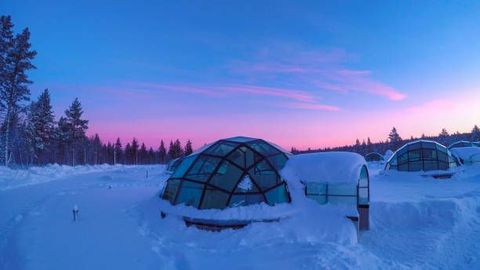
Glass igloo hotels: Rooms with large glass roofs or panoramic windows.
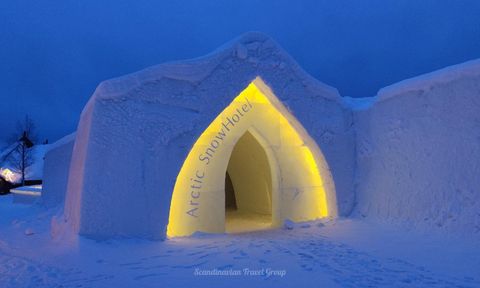
Snow igloo accommodation: Temporary winter structures made primarily from snow.
Igloo cabins: Insulated cabins designed with an igloo-inspired shape or theme.
Igloo resorts: Properties containing multiple themed accommodation units.
Arctic igloo stays: Accommodation located in northern or polar-region destinations.
Winter igloo accommodation: Seasonal stays designed specifically for cold-weather travel.
Traditional igloos have a much older cultural history than modern tourist accommodation. Inuit communities historically used snow houses as temporary winter shelters. Modern commercial igloo-themed accommodation is a separate development, created primarily for recreation and tourism.
Why Igloo-Themed Stays Matter in Modern Travel
Igloo accommodation combines accommodation with landscape observation. This makes it particularly relevant to travellers interested in nature tourism, winter tourism, astronomy, and Northern Lights experiences.
One important feature is the relationship between the accommodation and its surroundings. Instead of simply providing a room, a glass igloo can provide a direct visual connection with forests, frozen lakes, mountains, or the night sky.
This type of accommodation can be relevant to several groups:
Travellers interested in Arctic destinations
Families looking for distinctive winter experiences
Couples interested in scenic accommodation
Photography and astronomy enthusiasts
Visitors planning Northern Lights trips
People researching unique accommodation types
Travellers interested in sustainable and nature-based tourism
The concept has also developed beyond simple snow shelters. Modern properties may combine glass roofs with heating, ventilation, private bathrooms, saunas, kitchens, and other indoor facilities. For example, Finnish properties currently list glass igloo units with heated glass panels and facilities designed for cold-weather conditions.
Main Igloo Stay Types
| Accommodation type | Main feature | Typical setting |
|---|---|---|
| Glass igloo | Panoramic glass roof | Arctic or winter destinations |
| Snow igloo | Snow-built structure | Seasonal winter locations |
| Igloo cabin | Insulated enclosed unit | Forest or wilderness areas |
| Glass-roof cabin | Large roof or ceiling windows | Northern nature destinations |
| Igloo resort | Multiple themed units | Tourist and wilderness areas |
The differences are important because the word “igloo” does not always mean that a room is actually constructed from snow or ice. Some properties use the term for a glass-roofed cabin or another Arctic-inspired structure.
Recent Developments in Igloo and Arctic Accommodation
The igloo accommodation sector has continued to develop, particularly in Finnish Lapland. Recent developments show greater variety in accommodation design, including panoramic glass roofs, family-sized units, private saunas, and larger wilderness properties.
In October 2026, new accommodation developments in Finnish Lapland included additional glass igloos and other panoramic accommodation concepts for the 2026–2027 winter season. Halo Riverside Resort, for example, announced 39 new glass igloos, while Aava Glass Igloos was scheduled to open with 12 glass igloo suites in November 2026.
The development of this accommodation category also reflects a wider trend toward nature-based and experiential tourism. Academic research published in 2025 described glass igloo and glass-fronted cabin resorts as an established part of tourism development in Lapland and neighbouring northern regions, with continued expansion beyond the earliest tourism centres.
Another important development is the growing interest from international travellers. In May 2026, tourism-industry reporting highlighted increasing interest from Indian outbound travellers in Arctic and nature-focused travel experiences in Finnish Lapland.
Seasonal Availability
Igloo accommodation is often seasonal, although some modern units operate throughout the year.
For example, Visit Finland lists Arctic SnowHotel's glass igloos as available from September through March, while its snow and ice hotel has a shorter winter season.
This means travellers should check:
Opening and closing dates
Winter weather conditions
Daylight hours
Aurora visibility periods
Road and transfer conditions
Indoor heating arrangements
Cancellation and reservation policies
Seasonality is particularly important because the appearance and accessibility of an Arctic destination can change significantly between autumn, midwinter, and spring.
Laws, Policies, and Environmental Considerations
Rules affecting igloo-themed stays depend on the country, municipality, protected area, and type of accommodation. Finland provides a useful example because Finnish Lapland is one of the best-known regions for glass igloo tourism.
Finland's Everyman's Rights allow people to move through nature and temporarily camp in many areas, but these rights do not apply in the same way everywhere. National parks and nature reserves can have additional restrictions, particularly concerning camping, fires, routes, and environmental protection.
In national parks, camping may be limited to designated locations, and open fires are generally restricted to maintained fire sites. During wildfire warnings, additional fire restrictions can apply.
For accommodation operators, construction and land-use requirements are also relevant. Finland's environmental administration states that construction generally requires a building permit or another form of official approval, while substantial changes in building use can also require approval. Local building-control authorities handle these matters.
Accommodation operators also have responsibilities concerning traveller information. Finland's official guidance states that accommodation establishments must make traveller notifications, with specific requirements for foreign visitors and passenger information.
For visitors, the practical lesson is simple: an igloo located near a protected Arctic landscape does not automatically provide unrestricted access to that landscape. Local rules should always be checked before hiking, camping, making fires, or entering restricted areas.
Tools and Resources for Planning an Igloo Stay
Several resources can help travellers research an Arctic igloo accommodation guide and prepare for winter travel.
Destination information: Official tourism websites such as Visit Finland provide information about destinations, accommodation types, seasons, outdoor activities, and regional travel planning.
Protected-area information: Luontoon provides official guidance about Finnish national parks, camping, fire safety, trails, and Everyman's Rights.
Weather resources: Local meteorological websites and weather applications can help monitor temperature, snowfall, wind, cloud cover, and winter travel conditions.
Aurora information: Aurora forecasts can help travellers understand solar activity and cloud conditions, although no forecast can guarantee a Northern Lights sighting.
Travel planning tools: Maps, route planners, airport information, public transportation applications, and road-condition resources can help with transfers between airports, towns, and remote accommodation.
Travel documentation: International travellers should check passport requirements, visa rules where applicable, travel insurance considerations, and destination-specific entry information before departure.
Useful Planning Checklist
Before choosing an igloo-themed stay, consider:
Accommodation type and construction
Location and distance from the nearest town
Seasonal opening dates
Heating and ventilation
Bathroom and indoor facilities
Glass-roof design and visibility
Winter transportation conditions
Nearby protected areas
Local outdoor rules
Emergency and communication arrangements
A useful approach is to compare the accommodation itself with the surrounding destination. A visually impressive room may be located farther from major attractions, while another property may provide easier access to transport and local activities.
Frequently Asked Questions
What is an igloo-themed stay?
An igloo-themed stay is accommodation inspired by traditional igloos or Arctic environments. It can be a snow-built igloo, glass igloo, igloo cabin, or another structure designed around the igloo concept.
Are glass igloos actually made of ice?
Usually, no. Modern glass igloo accommodation generally consists of an insulated structure with glass roofs or panoramic windows. Snow and ice hotels are different accommodation types because their main structures are constructed from snow or ice.
Where are igloo stays most commonly found?
They are particularly associated with northern destinations such as Finnish Lapland, northern Sweden, Norway, Iceland, Greenland, and parts of Canada. Finnish Lapland has become especially well known for glass igloo hotels and Arctic accommodation.
Can igloo accommodation be used throughout the year?
Some modern glass igloos operate year-round, while others are seasonal. Snow and ice accommodation is generally more dependent on winter conditions. Individual properties publish their own operating periods, so dates should be checked before planning a trip.
Is an igloo stay suitable for families?
Some igloo accommodations are designed for couples, while others have family-sized units. For example, Finnish Arctic accommodation includes units designed for families with children. Travellers should check occupancy limits, sleeping arrangements, heating systems, and indoor facilities before making a reservation.
Conclusion
Igloo-themed stays represent a modern form of nature-focused accommodation that connects visitors with Arctic landscapes, winter scenery, and northern travel experiences. The category includes traditional snow igloos, glass igloo hotels, insulated cabins, and larger Arctic resorts.
The most important distinction is between the different types of accommodation. A glass igloo is generally designed for comfortable landscape and sky viewing, while a snow igloo is a seasonal structure with very different environmental and practical characteristics.
Recent developments in Finnish Lapland show that the category continues to evolve, with new glass igloos, panoramic cabins, and other Arctic accommodation concepts appearing for the 2026–2027 season.
For travellers, careful planning is more important than the igloo concept alone. Checking seasonal conditions, local regulations, protected-area rules, transportation, accommodation facilities, and weather information can help create a safer and more informed winter travel experience.

Related Post...
Learn About Igloo-Themed Stays: Tips, Knowledge, and Helpful Travel Resources
Updated: November 17, 2026
Read More
Understanding Train Carriage Hotels: Essential Facts, Types, and Helpful Details
Updated: November 17, 2026
Read More
Explore Green Transportation: A Complete Guide to Sustainable Travel and Eco-Friendly Mobility
Updated: October 26, 2026
Read More