Learn About Luxury Watches: Tips, Knowledge, Styles, and Helpful Resources
Luxury watches are timepieces known for detailed craftsmanship, specialized movements, distinctive designs, and the use of carefully selected materials. They can include mechanical, automatic, and quartz technologies, as well as features such as chronographs, calendars, power-reserve indicators, and water resistance.
The term “luxury” does not describe only one type of watch. A classic dress watch may emphasize a slim case and understated dial, while a sports luxury watch may focus on durability, water resistance, and an integrated bracelet. A chronograph may be designed around elapsed-time measurement, while a mechanical luxury watch may highlight the movement itself.
Luxury watch brands also differ significantly in design philosophy. Swiss luxury watches are widely associated with traditional mechanical watchmaking, but important watchmaking traditions also exist in Japan, Germany, France, Italy, and other countries.
Understanding the basic categories makes it easier to compare luxury watch styles without relying only on brand reputation or appearance.
Why Luxury Watches Matter Today
Luxury watches combine practical timekeeping with mechanical engineering, design, craftsmanship, and cultural history. For many enthusiasts, the interest comes from understanding how a movement works or how a particular design developed over time.
The category also includes a broad range of preferences:
Luxury watches for men: Often include dress watches, sports models, dive watches, chronographs, and larger mechanical designs.
Luxury watches for women: May include compact dress watches, jewelry-inspired designs, automatic models, and quartz timepieces.
Classic luxury watches: Usually emphasize traditional proportions, restrained dials, and long-established design elements.
Modern luxury watches: Often experiment with case shapes, materials, colors, and contemporary movement technologies.
Designer watches: Place greater emphasis on visual identity and fashion-oriented design.
Premium watches: Can cover a wide range of construction methods and movement technologies.
This variety helps explain why luxury watch guides often discuss much more than brand names. Movement type, case material, complications, water resistance, accuracy, servicing requirements, and intended use can all influence how a watch should be understood.
Major Luxury Watch Styles
Luxury watch styles are generally grouped according to their appearance, function, and intended setting.
| Watch Style | Typical Characteristics | Common Use |
|---|---|---|
| Dress watches | Slim case, simple dial, refined appearance | Formal and professional settings |
| Dive watches | Water resistance, rotating bezel, strong legibility | Water-related activities |
| Chronograph watches | Stopwatch function and sub-dials | Timing and sporting applications |
| Sports luxury watches | Durable construction and practical design | Everyday and active use |
| Classic watches | Traditional proportions and styling | Versatile occasions |
| Modern watches | Contemporary materials and shapes | Casual and modern settings |
| Mechanical watches | Mechanical movement without a battery | Horology-focused use |
| Automatic watches | Self-winding mechanical movement | Everyday mechanical watch use |
The distinction is not always strict. One watch can be both a sports luxury watch and an automatic mechanical timepiece, for example.
Understanding Luxury Watch Movements
The movement is the mechanism responsible for keeping time and operating the watch's functions. It is one of the most important technical elements to understand.
Mechanical movements use a mainspring, gears, escapement, and balance system. They do not depend on a conventional battery. Mechanical watch movements are often appreciated for their engineering and finishing.
Automatic movements are mechanical movements that wind through the motion of the wearer's wrist. An automatic watch can also be manually wound through its crown, depending on its construction.
Quartz movements use electronic regulation and a battery or another electrical energy source. Quartz luxury watches can provide highly consistent timekeeping while incorporating premium case materials and detailed finishing.
A simple comparison is useful:
| Movement Type | Energy Source | Main Characteristic |
|---|---|---|
| Mechanical | Wound mainspring | Traditional mechanical construction |
| Automatic | Wound mainspring + rotor | Winding through wrist movement |
| Quartz | Battery/electronic power | Electronic time regulation |
Mechanical and automatic watches are often discussed together, but they are not identical. “Mechanical” describes the movement category, while “automatic” describes how the mainspring is wound.
Luxury Watch Materials and Construction
Materials affect appearance, durability, weight, and maintenance requirements.
Stainless steel luxury watches are widely used because stainless steel can provide a combination of strength, corrosion resistance, and versatility.
Gold luxury watches may use yellow, white, or rose gold depending on the design. Gold can also be combined with steel in two-tone construction.
Platinum luxury watches are associated with high density and a distinctive appearance. Platinum is considerably heavier than many other commonly used case materials.
Other materials may include ceramic, titanium, sapphire crystal, carbon-based composites, and specialized alloys.
The crystal covering the dial is another important component. Sapphire crystal is commonly used in higher-end watches because of its strong scratch resistance, although it can still be damaged by significant impact.
Luxury Watch Designs and Collections
Luxury watch collections often contain several variations based on the same underlying design concept. Differences may include case diameter, dial color, bracelet or strap design, movement, complications, and material.
A useful way to evaluate a collection is to examine its design language rather than focusing only on individual models.
Important design elements include:
Case shape and diameter
Dial layout
Hour markers and hands
Bezel design
Crown configuration
Bracelet or strap construction
Crystal type
Case-back design
Movement finishing
Complications
Water-resistance rating
For people exploring luxury watches for men or luxury watches for women, these characteristics can be more useful than gender-based assumptions. Case dimensions, wrist proportions, comfort, and personal style are generally more practical considerations.
Recent Developments in the Luxury Watch Industry
The luxury watch industry has continued to experience changing regional demand and shifting consumer preferences during 2026.
The Federation of the Swiss Watch Industry reported that Swiss watch exports increased by 9.1% in October 2026, marking the fifth consecutive month of growth. The value of exports during the first ten months of 2026 was close to CHF 22 billion, up 3.4% compared with the same period in 2025.
India has also become an increasingly important market. In its July 2026 report covering the first half of the year, the Federation reported that Swiss watch exports to India increased by 31.5% compared with the first half of 2025. India moved into fifth place among Swiss watch export markets in that period.
Material preferences have also been changing. October 2026 data showed growth in steel and bimetallic watches, while the overall performance of precious-metal watches remained relatively stable.
Another continuing development is the combination of traditional mechanical watchmaking with modern materials, precision manufacturing, computer-aided design, and advanced production techniques. This has allowed manufacturers to experiment with lighter cases, stronger components, and more complex movement architectures.
Laws, Standards, and Policies in India
Luxury watches can be affected by several areas of Indian regulation, particularly when they contain precious metals or are imported as packaged products.
The Bureau of Indian Standards (BIS) administers India's hallmarking framework for precious-metal articles. BIS states that gold and silver are currently covered under India's hallmarking system.
However, the rules should not be applied broadly to every watch simply because a watch contains metal. BIS information specifically identifies exemptions and categories relevant to precious-metal articles, including an exemption for gold watches under the mandatory hallmarking framework.
Imported and packaged watches can also be affected by the Legal Metrology (Packaged Commodities) Rules, 2011. Government guidance identifies declarations such as importer information, country of origin for imported products, generic product name, manufacturing or import information, MRP inclusive of taxes, and consumer-care details for covered retail packages.
The BIS Act, 2016 and related conformity-assessment rules provide the broader legal framework for products that fall under applicable compulsory standards.
Because regulations can change and applicability depends on the exact product, material, packaging, and import circumstances, current government notifications should be checked before making compliance decisions.
Helpful Tools and Resources
Several resources can help people understand luxury watch specifications and technical terminology.
Watch specification guides: Useful for learning about case dimensions, water resistance, movements, complications, and materials.
Movement databases: Helpful for identifying mechanical and automatic movement families and understanding their basic architecture.
Timekeeping tools: Smartphone time references and atomic-clock-based websites can help compare the displayed time of a watch with a standardized reference.
Watch measurement tools: Digital calipers can be used to understand case diameter, thickness, lug width, and bracelet dimensions.
BIS resources: BIS provides information about Indian Standards, hallmarking, and conformity assessment.
Federation of the Swiss Watch Industry: Its statistical publications provide current information about Swiss watch exports and regional market trends.
Manufacturer documentation: Official technical specifications can help verify movement type, water resistance, materials, dimensions, and care instructions.
A useful personal comparison checklist can include:
Movement type
Case material
Case diameter and thickness
Crystal material
Water resistance
Complications
Strap or bracelet
Power reserve
Accuracy information
Maintenance requirements
Country of manufacture
Frequently Asked Questions
What makes a watch a luxury watch?
Luxury watches generally combine refined construction, specialized movements, distinctive design, premium materials, detailed finishing, and established watchmaking traditions. There is no single technical feature that defines every luxury watch.
What is the difference between mechanical and automatic watches?
Both use mechanical movements. A mechanical watch may require manual winding, while an automatic watch uses a rotor to wind its mainspring through wrist movement. Automatic watches can also often be manually wound.
Are Swiss luxury watches always mechanical?
No. Swiss watchmaking includes mechanical, automatic, and quartz watches. “Swiss” primarily identifies the watchmaking origin and applicable Swiss requirements rather than a specific movement type.
What are the main luxury watch styles?
Common categories include dress watches, dive watches, chronographs, sports luxury watches, classic watches, and modern watches. Some models combine characteristics from multiple categories.
How should someone compare luxury watch materials?
Consider durability, weight, appearance, maintenance, and intended use. Stainless steel is versatile, gold provides a distinctive precious-metal appearance, and platinum is dense and durable. Other materials such as ceramic and titanium have different technical characteristics.
Conclusion
Luxury watches bring together timekeeping, mechanical engineering, design, materials science, and horological history. Understanding the differences between mechanical, automatic, and quartz movements provides a useful foundation for exploring the category.
Styles also vary widely, from traditional dress watches and classic luxury watches to dive watches, chronographs, and modern sports designs. Materials such as stainless steel, gold, platinum, ceramic, and titanium further influence the appearance and construction of individual timepieces.
Current industry data shows continued international interest in Swiss watches, with India becoming an increasingly significant market in 2026. At the same time, changes in materials, manufacturing technology, and contemporary design continue to expand the range of luxury timepieces available worldwide.
For anyone learning about luxury watches, the most useful approach is to look beyond brand names and examine movement technology, construction, materials, design, intended use, and applicable standards. This provides a clearer and more informed understanding of luxury watch collections and the broader world of horology.

Related Post...

Learn About Designer Clothing: Tips, Knowledge, Styling Ideas, and Helpful Resources
Updated: November 24, 2026
Read More
Understanding Designer Trending Suits: Essential Fashion Trends, Designs, and Features
Updated: November 24, 2026
Read More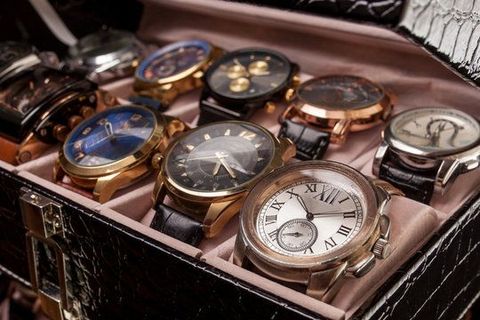
Learn About Luxury Watches: Tips, Knowledge, Styles, and Helpful Resources
Updated: November 24, 2026
Read More