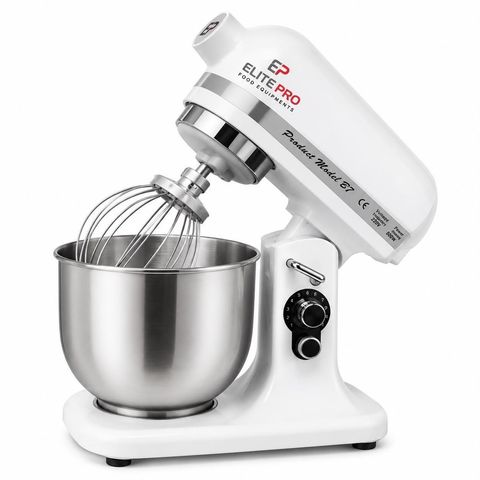
Explore Food Mixing Machines: A Complete Guide to Types, Features, and Applications
Food mixing machines are mechanical systems used to combine ingredients into a consistent mixture during food preparation and manufacturing. They are used in bakeries, dairy plants, beverage production facilities, confectionery units, commercial kitchens, and packaged food manufacturing operations.
Mixing helps distribute ingredients evenly, control texture, improve consistency, and prepare products for later processing. Depending on the food being produced, a machine may blend dry powders, combine liquids, mix dough, emulsify sauces, or incorporate solid ingredients into a liquid base.
An industrial food mixer differs from a household mixer mainly in its intended operating environment, processing capacity, mixing mechanism, and integration with other production equipment. Commercial food mixing machines are designed for the requirements of professional kitchens and food preparation businesses, while industrial systems can support larger or more specialized manufacturing processes.
Food manufacturing machinery includes mixing systems as well as equipment for weighing, grinding, heating, cooling, filling, packaging, and quality inspection. Mixing is often an important stage because ingredient distribution can influence the quality of the finished product.
Types of Industrial Food Mixing Equipment
Different foods require different mixing actions. Selecting a suitable machine depends on ingredient properties, batch size, required consistency, sanitation needs, and production conditions.
Planetary mixers
Planetary mixers use an attachment that rotates around its own axis while moving around the mixing bowl. This motion helps combine ingredients throughout the container.
Common applications include:
Cake batter and bakery mixtures.
Creams, icings, and fillings.
Thick mixtures prepared in commercial kitchens.
Selected confectionery and prepared food applications.
Planetary mixers are versatile, but the attachment, bowl shape, and operating speed must suit the ingredients.
Ribbon blenders
Ribbon blenders use rotating inner and outer helical blades to move ingredients in different directions within a horizontal trough. They are commonly used for relatively free-flowing dry materials.
Typical applications include powdered seasonings, dry food ingredients, flour blends, and selected nutritional or baking mixes. Moisture content, particle size, and ingredient density can affect mixing performance.
Paddle mixers
Paddle mixers use paddles to move ingredients through a mixing chamber. Their design can accommodate certain moist, granular, chunky, or moderately viscous products.
Applications may include prepared salads, fillings, seasoning mixtures, and selected meat or plant-based food formulations. The appropriate design depends on the food's texture and sensitivity to mechanical handling.
High-shear mixers
High-shear mixers create intense mechanical action to disperse ingredients and reduce the size of droplets or agglomerates. They are useful when a product needs a uniform emulsion or fine dispersion.
Common examples include sauces, dressings, creams, and selected beverage formulations. Temperature control and processing time are important because excessive shear can affect product texture or generate unwanted heat.
Continuous mixers
Continuous mixing systems receive ingredients continuously and produce a mixed output during operation. They are used in production lines where ingredient flow and processing conditions can be controlled consistently.
These systems may be used for beverage bases, liquid food formulations, and selected large-scale food manufacturing processes. Accurate ingredient feeding and monitoring are essential to maintain a consistent mixture.
Vacuum mixers
Vacuum mixers operate under reduced pressure to limit the amount of air incorporated into a product. Depending on the application, this can help reduce bubbles, support product uniformity, and improve the appearance of certain mixtures.
They are used in selected sauces, pastes, creams, and other specialized food formulations. Their suitability depends on the product's physical properties and process requirements.
Important Features and Operating Principles
An industrial food mixer should be evaluated according to the product it processes and the hygiene requirements of the production environment.
Mixing mechanism and speed control: Different ingredients require different levels of mechanical action. Adjustable speed and suitable mixing attachments help operators manage consistency and avoid unnecessary ingredient damage.
Capacity and batch size: Machine capacity should match the intended production process. The working capacity may be lower than the total bowl or vessel volume, particularly when ingredients expand, become aerated, or move unevenly.
Food-contact materials: Stainless steel is widely used in food processing because appropriate grades can provide corrosion resistance and support hygienic cleaning. The correct material depends on the ingredients, cleaning chemicals, temperature, and applicable standards.
Cleaning and sanitation: Accessible surfaces, suitable seals, hygienic welds, and designs that minimize food traps can help reduce contamination risks. Cleaning procedures should match the machine's construction and the food safety plan.
Automation and monitoring: Sensors, programmable controls, timers, temperature measurements, and automated ingredient feeding can improve process repeatability. Automated controls still require appropriate calibration, maintenance, and operator oversight.
Energy and operational efficiency: Motor selection, mixing duration, batch loading, and equipment maintenance can influence energy consumption and throughput. Performance should be assessed under actual operating conditions rather than inferred from specifications alone.
Applications Across the Food Industry
Industrial food mixing equipment supports a wide range of production activities.
| Industry | Typical mixing application | Important consideration |
|---|---|---|
| Bakery | Dough, batter, cream, and fillings | Texture and dough development |
| Dairy | Yogurt bases, creams, and selected dairy blends | Temperature and hygiene |
| Beverages | Syrups, liquid concentrates, and drink bases | Ingredient dispersion |
| Confectionery | Chocolate mixtures, fillings, and pastes | Viscosity and temperature |
| Sauces and dressings | Emulsions, marinades, and seasonings | Stability and uniformity |
| Prepared foods | Fillings, salads, and blended ingredients | Ingredient integrity |
Food processing equipment manufacturers develop machinery for different product categories, while food processing equipment suppliers may provide technical specifications, documentation, and information about available configurations. When evaluating equipment, users should verify the manufacturer's technical capabilities, hygienic design, and suitability for the intended application.
Food production machinery is often part of a connected process. A mixer may operate alongside weighing systems, conveyors, heating vessels, pumps, filtration equipment, filling systems, and packaging lines. Effective coordination helps maintain ingredient traceability and consistent production conditions.
Recent Developments in Food Mixing Technology
Food production machinery is evolving as manufacturers focus on automation, hygienic design, product consistency, and efficient use of resources.
A report released by PMMI and the Food Production Solutions Association on 8 May 2026 identified automation, food safety, artificial intelligence, and sustainability as important trends in food and beverage processing machinery. The report also highlighted growing attention to health-focused food formulations and improved production monitoring.
Key developments include:
Automated mixing: Programmable controls can help maintain repeatable mixing times, speeds, and ingredient sequences.
Digital monitoring: Sensors can record temperature, motor load, and other operating parameters to support process control.
Hygienic equipment design: Manufacturers are emphasizing accessible cleaning surfaces, improved sanitation procedures, and suitable food-contact materials.
Flexible production: Modular equipment can help facilities handle different recipes and product formulations.
Resource efficiency: Improvements in water management, energy use, and cleaning procedures can support more efficient operations.
These are industry trends rather than features available on every machine. The practical benefits depend on the equipment design, the food being processed, and the production environment.
Food Safety Laws and Policies in India
Food mixing machines used in India must be considered within the country's broader food safety and manufacturing framework.
The Food Safety and Standards Authority of India (FSSAI) regulates food safety through applicable legislation and regulations. Under the Food Safety and Standards (Licensing and Registration of Food Businesses) Regulations, 2011, relevant businesses must follow applicable hygiene requirements and maintain a documented Food Safety Management System. Schedule 4 addresses good manufacturing practices and good hygiene practices.
Important considerations include:
Equipment hygiene: Food-contact surfaces should be suitable for the ingredients and designed to support effective cleaning.
Contamination prevention: Equipment operation and sanitation procedures should minimize physical, chemical, and microbiological hazards.
Maintenance: Damaged seals, worn components, and poorly maintained machinery can create contamination risks.
Ingredient control: Correct measurement, ingredient identification, and allergen management help maintain product safety.
Documentation: Cleaning records, maintenance logs, and relevant production records can support food safety monitoring.
The specific requirements depend on the food category, facility, and activity. Manufacturers should consult current FSSAI regulations and applicable state or central requirements rather than assuming that one machine specification guarantees compliance.
Tools and Resources for Equipment Evaluation
The following resources can help readers understand food processing equipment, hygiene requirements, and machinery selection.
FSSAI
Ministry of Food Processing Industries
PMMI: Institute of Food Technologists
A basic equipment evaluation checklist can include:
Ingredient type and required mixing consistency.
Batch size and expected production frequency.
Mixing speed and temperature requirements.
Food-contact materials and cleaning procedures.
Equipment compatibility with existing production lines.
Operator safety and maintenance requirements.
Documentation and applicable food safety standards.
Food processing equipment manufacturers and food processing equipment suppliers may provide technical drawings, operating manuals, and specifications that help users compare suitable configurations.
Frequently Asked Questions
What is an industrial food mixer used for?
An industrial food mixer combines ingredients in food manufacturing processes. Applications include dough preparation, dry seasoning blending, sauce production, dairy processing, and selected beverage formulations.
Which types of food mixing machines are commonly used?
Common types include planetary mixers, ribbon blenders, paddle mixers, high-shear mixers, continuous mixers, and vacuum mixers. The appropriate type depends on ingredient properties and the required mixing result.
How do commercial food mixing machines differ from industrial mixers?
Commercial mixers commonly support professional kitchens, bakeries, and smaller food preparation operations. Industrial mixers are designed for manufacturing processes that may require larger batches, specialized mixing mechanisms, or integration with automated production lines.
What should be considered when selecting food manufacturing machinery?
Important factors include ingredient characteristics, production capacity, mixing consistency, cleaning requirements, food-contact materials, operating controls, and compatibility with other equipment.
Why is hygienic design important in food mixing equipment?
Hygienic design helps reduce contamination risks and makes equipment easier to clean and maintain. It supports food safety when combined with appropriate sanitation procedures, monitoring, and operator training.
Conclusion
Food mixing machines play an important role in modern food production by combining ingredients, supporting consistent textures, and preparing products for subsequent processing. Different technologies serve different purposes, from bakery mixing and dry blending to emulsification and continuous production.
Understanding industrial food mixing equipment requires attention to machine design, ingredient properties, production requirements, hygiene, and applicable regulations. Automation and digital monitoring are also creating new opportunities for process control, although their suitability varies across applications.
By learning about machine types, technical features, food safety practices, and reliable industry resources, readers can develop a clearer understanding of how commercial food mixing machines and other food production machinery contribute to safe, consistent, and efficient food manufacturing.

Related Post...

Learn E-Waste Recycling Plant Basics: A Beginner’s Guide to Methods, Equipment, and Resources
Updated: October 23, 2026
Read More
Explore Paper Recycling Machines: A Complete Guide to Technology, Types, and Applications
Updated: October 26, 2026
Read More